Business Restructuring Review Vol. 25 No. 5 September-October 2026
In This Issue
"COMI Tourism" Alone Not Basis for Denying Chapter 15 Enforcement of UK Restructuring Plan Containing Non-Debtor Releases
In In re NFE Global Holdings Limited, 2026 WL 2032660 (Bankr. S.D.N.Y. July 14, 2026), two affiliates of a New York-based Delaware corporation filed restructuring cases under the UK Companies Act (2006) seeking to implement debt swap plans. One of the debtors had been incorporated in the United Kingdom immediately before filing its restructuring proceeding specifically for the purpose of obtaining approval of a UK restructuring plan (including non-debtor releases) for which it could later seek enforcement in the United States under chapter 15. After the plans were approved by a UK court, the debtors' foreign representative filed chapter 15 petitions in the U.S. Bankruptcy Court for the Southern District of New York seeking recognition of the UK restructuring proceeding and enforcement of the plans. The bankruptcy court granted the recognition petitions and enforced the UK restructuring plans, including the releases. According to the court, even though "COMI tourism" should be scrutinized carefully, it is not by itself a basis to deny chapter 15 recognition and plan enforcement. The court also held that enforcement of the restructuring plans, including the releases, was within the court's discretionary authority under chapter 15, adequately protected the right of creditors, and was not manifestly contrary to U.S. public policy. [read more …]
Chapter 11 "Best Interests of Creditors Test" Not an Independent Basis for Subordination of a Claim
In In re Matheson Flight Extenders, Inc., 679 B.R. 21 (B.A.P. 9th Cir. 2026), a Bankruptcy Appellate Panel for the Ninth Circuit held that, after a reorganized debtor defaulted under a confirmed chapter 11 plan, the administrator of the plan could not seek to subordinate creditors' punitive damages claims under the "best interests of creditors test" in section 1129(a)(7) of the Bankruptcy Code. Compliance with the test is a condition to plan confirmation, rather than section 510, the provision of the Bankruptcy Code that specifically applies to subordination in bankruptcy cases. According to the panel, section 1129(a)(7), which incorporates chapter 7's priority of distribution scheme giving a lower priority to punitive damages claims, applies only in connection with confirmation of a chapter 11 plan and cannot serve as an independent basis to subordinate a claim after the plan has been confirmed. [read more …]
First Impressions: New York Bankruptcy Court Enforces Canadian Reverse Vesting Order in Chapter 15 Case
In In re Iovate Health Sciences Int'l Inc., 2026 WL 1295907 (Bankr. S.D.N.Y. May 12, 2026), the U.S. Bankruptcy Court for the Southern District of New York became the second court (and the first in the Second Circuit) to recognize and enforce a Canadian court's "reverse vesting order" ("RVO") in a chapter 15 case. In so ruling, the U.S. bankruptcy court held that: (i) the absence of any direct parallel to a "reverse vesting transaction" ("RVT") or RVO under U.S. bankruptcy law was not an impediment to chapter 15 recognition and enforcement; (ii) enforcement of the RVO—despite its similarity to controversial "Texas two-step" transactions in the United States—was not manifestly contrary to U.S. public policy; and (iii) the stock issuance pursuant to the RVT and proposed asset sale should not be subjected to scrutiny under the standards applicable to a bankruptcy asset sale in the United States. [read more …]
Eighth Circuit: Restrictive "Person Aggrieved" Test for Bankruptcy Appellant Standing Is Alive and Well, But Should It Be?
In Mercy Health Network v. Mercy Hospital, Iowa City, IA, 178 F.4th 449 (8th Cir. 2026), the U.S. Court of Appeals for the Eighth Circuit affirmed a district court's ruling that an unsecured creditor that opted out from (and was not bound by) third-party and debtor releases in a chapter 11 plan lacked standing to appeal a bankruptcy court's order confirming the plan. According to the Eighth Circuit panel, the creditor was not a "person aggrieved" by the order because it was not directly and pecuniarily harmed by the confirmation order, but instead sought to assert claims on appeal that belonged to other creditors affected by the releases. It also ruled that the creditor was not "aggrieved" merely because its claim was impaired by the chapter 11 plan. A concurring judge queried whether the restrictive "person aggrieved" test, which is a holdover from the repealed Bankruptcy Act and appears nowhere in the Bankruptcy Code, should continue to apply to bankruptcy appeals. [read more …]
Finality, Gatekeeping Provisions, and Creditors of Non-Debtor Entities
In In re Sorrento Therapeutics Inc., 2026 WL 1791033 (Bankr. S.D. Tex. June 21, 2026), a group of plaintiffs sued various non-debtor parties that had been involved in a chapter 11 case two years after confirmation of a chapter 11 plan that included a "gatekeeping" provision requiring bankruptcy court approval prior to the assertion of any "covered claims" against "protected parties" and a determination by the court that the claims were colorable. The defendants asked the U.S. Bankruptcy Court for the Southern District of Texas for an order enforcing the gatekeeping provision in the plan, which the plaintiffs claimed violated Fifth Circuit precedent. The court agreed with the plaintiffs that the gatekeeping provision, which was part of the plan (confirmed by a different bankruptcy judge originally assigned to the case), likely ran afoul of binding precedent. However, because the confirmation order was final, the plaintiffs never raised their objections during the pendency of the case or appealed the order, and the plaintiffs waited two years after the effective date of the plan to make the objection, the court ruled that: (i) the gatekeeping provision was valid and enforceable; (ii) the defendants were protected by the provision; (iii) the claims asserted by the plaintiffs belonged to the estate and had been assigned to a liquidation trust; and (iv) the plaintiffs' claims were not colorable. [read more …]
Newsworthy
Heather Lennox (Cleveland/New York) was named "Lawyer of the Year" and "One to Watch" in the 2027 edition of Best Lawyers in America® in the practice area Bankruptcy and Creditor Debtor Rights/Insolvency and Reorganization Law. Ryan Sims (Washington) was also recognized as "One to Watch." Other recognized attorneys include Corinne Ball (New York), Bruce Bennett (Los Angeles), Carl E. Black (Cleveland), Jeffrey B. Ellman (Atlanta), Daniel J. Merrett (Atlanta), Brad B. Erens (Chicago), Gregory M. Gordon (Dallas), Dan T. Moss (Washington/New York), Kevyn D. Orr (Washington), T. Daniel Reynolds (Cleveland), and Thomas W. Wearsch (New York/Cleveland).
Heather Lennox (Cleveland/New York) and Jasper Berkenbosch (Amsterdam) received a "Leading Partner" designation in the field "Restructuring (Including Bankruptcy): Corporate" or "Restructuring and Insolvency" in the 2026 edition of Legal 500. Other ranked lawyers included Corinne Ball (New York), Bruce Bennett (Los Angeles), Alexander Ballmann (Munich), Carl E. Black (Cleveland), Olaf Benning (Frankfurt), Joshua M. Mester (Los Angeles), Anna C. Bretting (Munich), Dan T. Moss (Washington/New York), Sid Pepels (Amsterdam), Ben Rosenblum (New York), Erik Schuurs (Amsterdam), Thomas M. Wearsch (New York), and Gerjanne te Winkel (Amsterdam).
Andrew M. Butler (New York) has been named a 2026 "Rising Star" in the Restructuring/Bankruptcy category by the New York Law Journal. The award recognizes the region's most promising lawyers who are under the age of 40.
Dan T. Moss (Washington/New York) has been elected to the International Insolvency Institute's (III) board of directors. III is a nonprofit organization dedicated to advancing the development, innovation, and reform of insolvency law and practice. As a member of the board of directors, Dan will guide the formation and development of the III.
An article written by Daniel J. Merrett (Atlanta) and Nathaniel Parr (Atlanta) titled "Southern District of Texas clarifies post-Purdue course for consensual third-party releases and gatekeeping provisions" was published in the August 2026 INSOL International Monthly News Update.
An article written by Corinne Ball (New York) titled "'Good Forum Shopping' v. Global 'Bankruptcy Tourism': Cautionary Principles Per New Fortress Energy" was published in the October 2, 2026, edition of the New York Law Journal.
An article written by Dan T. Moss (Washington/New York) and Corinne Ball (New York) titled "New York Bankruptcy Court: Premature Allegations of Creditor Mistreatment Insufficient to Deny Chapter 15 Recognition of Foreign Restructuring Proceeding" was published on August 18, 2026, in Lexis Practical Guidance.
An article written by Corinne Ball (New York), Dan T. Moss (Washington/New York), David S. Torborg (Washington), and Isel M. Perez (Miami) titled "New York District Court Affirms Narrow Scope of 'Public Policy Exception' in Chapter 15 Cases" was posted on July 14, 2026, on the Harvard Law School Bankruptcy Roundtable.
An article written by Dan T. Moss (Washington/New York) and David S. Torborg (Washington) titled "Florida Bankruptcy Court Examines Scope of Discovery in Chapter 15 Cases" was published on August 18, 2026, in Lexis Practical Guidance.
An article written by Dan T. Moss (Washington/New York), Isel M. Perez (Miami), and Ryan Sims (Washington) titled "Delaware District Court Affirms Chapter 15 Recognition Order Enforcing Nonconsensual Third-Party Releases" was published on August 18, 2026, in Lexis Practical Guidance.
An article written by Daniel J. Merrett (Atlanta) and Alexandra L. Wainwright (Cleveland) titled "Bankruptcy Court Evaluates Trustee's Authority to Sell Avoidance Actions and Right of Target Defendants to Object" was published on August 18, 2026, in Lexis Practical Guidance.
Jones Day was recognized by the Turnaround Management Association of Australia for representing Ravenswood Gold in the "Restructuring Deal of the Year." Jones Day advised the company's board of directors with respect to a more than A$1.4 billion refinancing implementing a comprehensive recapitalization of Queensland's largest gold mine at a critical time—addressing its debt and hedge liabilities, securing the future of the operation, and helping protect more than 400 jobs. The Jones Day team included Roger Dobson (Sydney), Nicholas Dunstone (Sydney), and Kathryn Sutherland-Smith (Sydney/Melbourne).
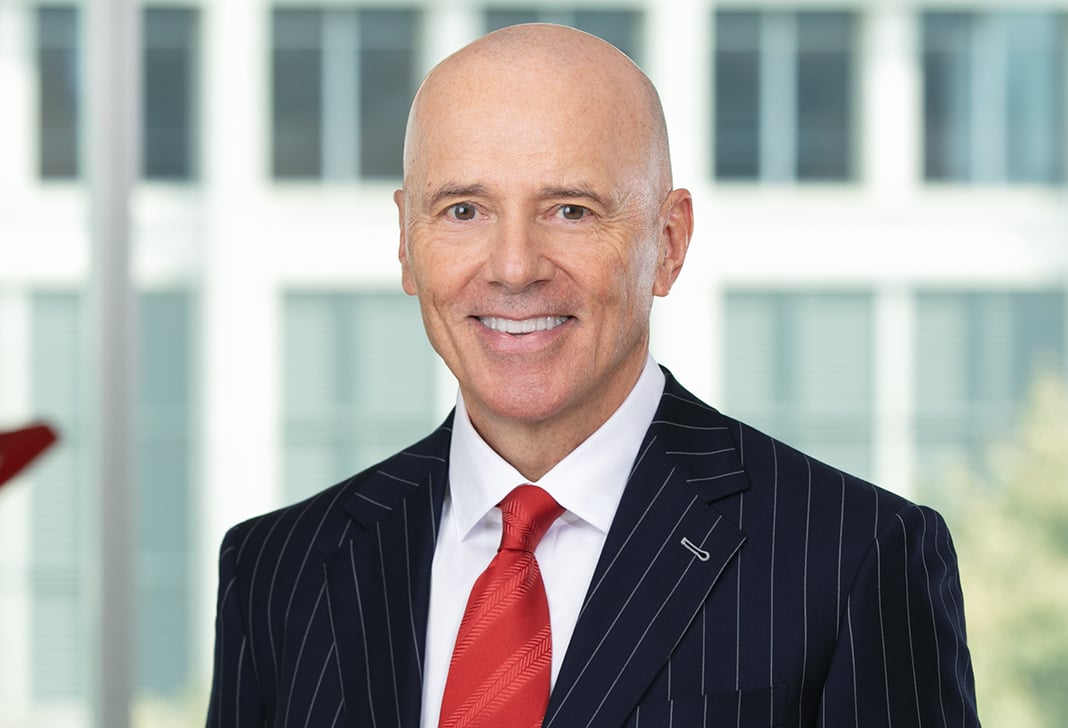
Lawyer Spotlight: Nicholas Dunstone
Nick Dunstone, a partner in the Sydney Office, advises international clients on complex cross-border financial restructurings and distressed debt investments across Asia-Pacific.
Nick previously practiced as a restructuring lawyer for 15 years and spent 11 years as an investment professional at Asia Research & Capital Management, where he led private and public credit investments, including primary lending, special situations, and distressed debt/restructurings, with a focus on energy and infrastructure.
Prior to joining Jones Day in 2026, Nick led restructurings across a diverse range of sectors including data centers, telecommunications, oil & gas, shipping groups, retail, property, casinos, dairy producers, nickel mines, industrials, rare earths producers, coal power and coal mining, nuclear power, and road infrastructure. Recent recognitions include: The Best Lawyers in Singapore (2026); Legal 500: leading partners for restructuring and insolvency in Singapore (2026); and Chambers, ranked in restructuring and insolvency in Singapore (2026).