JONES DAY TALKS®: A View from the Inside: A Conversation with Koch’s Nick Hoffman on the State of the Venture Market
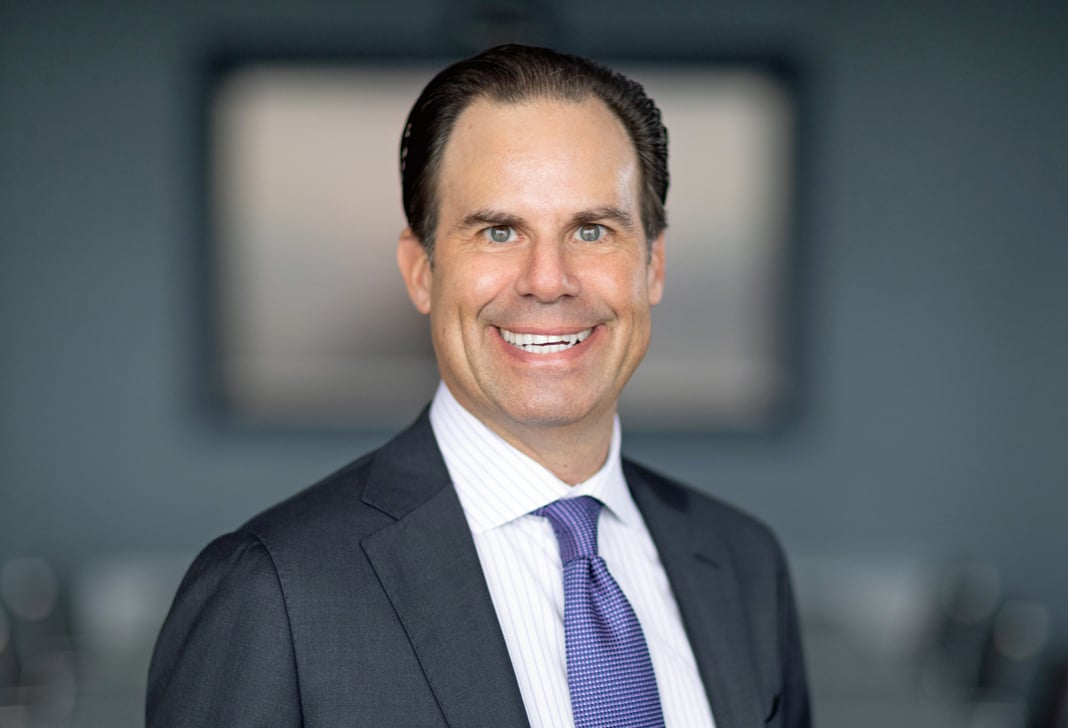
Jones Day partners Tim Curry and Taylor Stevens are joined by Nick Hoffman, Associate General Counsel, M&A and Venture Capital at Koch. They discuss the general state of the VC market, how Koch evaluates an opportunity, AI deals, the return of the nontraditional investors, and reasons for optimism about 2026.
Podcast: Play in new window | Download
SUBSCRIBE TO JONES DAY TALKS
Subscribe on Apple Podcasts
Subscribe on Android
Subscribe on Stitcher
Click here for the full transcript.
Dave Dalton:
Venture capital markets in early 2026 are showing signs of a definite recovery. Liquidity is improving and early stage funding is rising with new or recently inactive investors coming into the market. Of course, much of this is AI driven. Jones Day partners Tim Curry and Taylor Stevens are here to comment, along with guest panelists, Nick Hoffman at Koch Disruptive Technologies. The outlook for the rest of 2026 is encouraging. I'm Dave Dalton. You're listening to JONES DAY TALKS®.
If you're a regular listener of JONES DAY TALKS®, you're familiar with Jones Day partners, Tim Curry and Taylor Stevens. They have a combined nearly 60 years of experience in the areas of venture capital, private equity, emerging growth, M&A, and capital markets transactions. They check in about once a quarter to talk about trends and developments in the venture capital space, especially in the tech arena. We'll cover that, but today's program is a bit different. Tim and Taylor are joined by Nick Hoffman. Nick is associate general counsel, mergers and acquisitions and venture capital at Koch Disruptive Technologies. I'm going to flip to Taylor right now, he can tell us a little bit more about Nick and his background.
Tim, Taylor, Nick, welcome.
Taylor Stevens:
Great. Thank you, Dave, and it's great to be back. And it's great to do our first client guest podcast in the ECVC space. And there is no one better than Nick Hoffman to join us here today. Nick has so much deep experience in this space as a practitioner and as a partner at a top law firm. And as the lead in house counsel at Koch, he leads all of the investments for KDT, as well as investments and M&A for other operating companies within Koch. And we've been fortunate to work with Nick over several years and have done dozens of deals together through different market conditions, so up rounds and down rounds and some really creative structuring that we've done. And Nick has joined us as a guest and has been a panelist in many Jones Day sponsored events like FinAccelerate. So we're really excited, we're really grateful to have Nick with us here today for our podcast.
Nick Hoffman:
Yeah. Thanks, Taylor. Happy to be here. It's a pleasure to join you guys and to add just a couple of years to your vast combined years of legal experience. So thanks for having me.
Dave Dalton:
Yeah. And Nick, you're joining us at a very interesting time in terms of the VC markets and so forth. A good way to kick this off is we finished the first quarter of 2026. We sit here. The three of you, what are you seeing generally in the US venture market? Any key trends developing other than we all know AI is hot, but are there any significant changes versus the second half of 2025?
So with that as a kickoff, let's start with Taylor. Taylor, what do you think versus second half of last year? What are we looking at now?
Taylor Stevens:
Yeah, you bet. And I think it's a great place to start. There are two key trends that we saw coming out of 2025. And the first is that deal making continued to warm. So for all of us that live and breathe in this space, that's a really good thing to see. It was a sign of some continued optimism. And we saw the number of deals uptick slightly. Depending on where you look, it might've been an uptick in the US and maybe flat or a slight downtick globally. But what we did notice was a big increase in deal value, and that's a significant trend. We're seeing larger deals, mega deal dominance, and a lot of that is AI driven.
The second key trend coming out of 2025 was the liquidity market or the lack thereof. It just continued to be a bit anemic, and that had some big implications. Secondaries continued to play a really big role because the exit markets had not quite opened up. We also saw that VC fundraising stalled, and that's not surprising. When the exit markets are anemic, it makes it more difficult to fundraise. And so we saw 10-year lows in the fundraising. And then we also saw an increased consolidation level among these venture-backed companies. So venture-backed companies at the Series A and Series B stages were getting acquired more frequently than what we had seen before. And these acquisitions are private, private, hence the consolidation that I was referring to. So although these are acquisitions at the earlier stages, they're not the exits with a cash return or with the liquidity that would impact the exit market trends that we're really watching.
So as we moved into 2026, what's different and what's the same? There are three takeaways from looking at Q1. And number one is, in 2025 AI was hot, but in 2026 AI is the market. And we'll come back to that point. Secondly, we're seeing some liquidity improvement, which is really great. And I think people are cautiously optimistic about where 2026 will go, but we're definitely seeing a reopening and a broader pipeline. And then that plays into the third trend that we're seeing, which is there's some improvement in fundraising. And when you have improvement in the liquidity market, then of course LPs are a little more interested in investing. So I would say that fundraising has gone up a little bit, but it's very concentrated. So it's really the elite funds and the mega funds that are able to fundraise. It'll be an interesting trend to watch, but those are really what we're seeing as far as trends going into 2026.
Dave Dalton:
Tim, would you add anything to that?
Tim Curry:
Yeah, my view is a little bit narrow being here in the Bay Area, but it does, to me, feel like the closest thing to the dotcom boom, hopefully not the bust, but the boom, that I've seen over the last 20, 25 years since that time in the AI boom, there are so many deals, high valuations, a lot of money being raised, and just the velocity and number of deals has picked up dramatically in the first few months here of 2026 versus what I was seeing in 2025.
Dave Dalton:
Interesting. And you were quick to say, hopefully not on the dotcom, break up the bomb and so forth, but how long did the original dotcom boom run? We're years ago now, but was that a three or four year period of
Tim Curry:
It was five or six. It really kicked off with the Netscape IPO and then it ran, depending on how you want to define it, but it ran into 2001 and then was petering out pretty hard in 2002. So that was about a five or six year run. And we'll see about this one. It's certainly changing every industry and many walks of life all over the planet. So this is one that hopefully it'll last longer.
Dave Dalton:
All right. As we talk about trends, I have a note here. You mentioned we're seeing things with respect to split pricing rounds or split price rounds. Explain what that is, Tim, and what you're seeing in the market right now.
Tim Curry:
Yeah. So I want to get Nick's perspective on this, but I'll just describe it because there was a big Wall Street Journal article written about this maybe a month ago, and then I've had at least one deal since then that had this structure. And I thought it was pretty odd and unusual. And what it was is that the lead investors in the round got one price, and then those who filled out the remainder of the round got a different price, which was higher. So it was bifurcating leads get one price, non-leads get a different price. And it was surprising to me that they were able to fill out the round on that basis.
Obviously, the lead getting the lower price is going to be happy with it because there's less dilution when the round gets filled out. But I was surprised that the other non-leads who were putting in pretty large sums of money were willing to accept the lesser terms, the higher price. And in this case, it was about 100% increase in the price. So it was not insignificant that the followers or the people filling in the round were paying a much more significant price.
So Nick, on those, would KDT ever do something like that? Maybe if you got the lower price, I don't know if you would take the higher price, but what are your thoughts on that and is that indicative of something happening in the market?
Nick Hoffman:
Yeah, I suppose you could apply that in some niche scenarios where you're looking at timing considerations and when to come in. We've not put any lead term sheets in with that type of bifurcation. We've also thankfully not been on the receiving end of any of it. So to me, it's a pretty bespoke solution for facts and circumstances. And I'm guessing it's not going to become a trend in 2026 year.
Tim Curry:
It certainly seems to me like a bellwether of a very frothy market. It seems like something that could have been done back in the dotcom days, although I don't remember it happening then, but it's certainly something that is indicative of a very hot market where you can put terms on these lead investors and have them accept it and still go forward with the investment.
Dave Dalton:
Well, I was going to ask, is that a new way of structuring an issue or a deal? I hadn't heard that before.
Tim Curry:
Yeah. To me, Dave, it's the first time I've seen this, but The Wall Street Journal reported on it. So it's not just this one deal that I happened to do, that we happen to do, but it is something that's out there in the market.
Taylor Stevens:
Yeah, but I think that this structure is unique and it's new. We didn't see this in the dotcom boom. Maybe if it was happening, it was really few and far between. But it'll be interesting to see where it evolves and whether or not it stays specific just to a certain industry like AI.
Nick Hoffman:
I can't see probably use cases where it would make sense, especially in the AI buildup here, maybe more on the hardware or fab side where you've got upfront costs. You probably want a bit of a risk association with the dip and the valuation coming in ahead of folks. So as I mentioned earlier, I think kind of a timing consideration solution where you're coming in ahead of folks and allowing maybe an extended timeline for CapEx on a real build out, not really an R&D, a risk capital play. It would make sense, obviously, in a very limited use case to catch on.
Taylor Stevens:
Yeah. That's a really good point, Nick. When we think about doing these deals, we'll have an initial close. And if we have a period of time in which the other investors can come in, there's always sensitivity around how long do you leave that open because you don't want others to come in and get a longer look at something and then come in at the same valuation. So it's not fair. So we always navigate these time periods. So to Nick's good point, if you need to have a longer period for people to come in, this could be an effective tool.
Tim Curry:
This split pricing seems to be taking to the extreme what we've always had, which is that lead investors get different terms than those who fill out the round. However, in the past and in most deals, the lead investor gets different governance terms and different approval rights and the right to be on the board or the right to have observers. So this is taking that to the next level where the lead investor not only gets those rights, but here it gets better pricing and a lower price per share.
Dave Dalton:
Interesting. Well, let's stay with AI for a second, but it sounds like founders, especially in this AI space, have the upper hand on terms right now. I guess the founder's market, if you will, is that your experience, what you're watching right now? Let's go to Nick first.
Nick Hoffman:
It probably depends on the vertical and industry. And certainly, as Tim mentioned in the AI space, you're going to see a lot of that on the company favorable side. Given our verticals and other industries as well, we're seeing sort of business as usual. And to the earlier comments from Tim and Taylor on the market, coming off of 2025 with clearly more challenging market with more down rounds, flat rounds or manufactured flat rounds, we're seeing more optimism for 2026, which means we're experiencing and we'll continue to experience more up round typical term sheets. So I don't think it'll be overblown in the other industries or verticals, and we haven't seen it as such so far, which I think is encouraging.
Tim Curry:
Just kind of know what you said, Dave, is right in the AI space, the founders do seem to have the upper hand. It probably comes out in things like valuations, but it also comes out in class-based protected revisions versus series-based protective revisions. We're seeing more pushback on having series-based rights versus class-based rights. And then other things such as special board approval rights where the board plus a group of directors or plus one director has to approve various actions by the company. We're seeing more pushback in those areas, at least in AI deals.
Dave Dalton:
I see.
Taylor Stevens:
And I would just add putting it in perspective what's happening in AI. If you look at 2025, the value going into AI and machine learning, over 65% of the deal value was going into that industry alone. And you compare that to 2024, it was about 45%. So it's a pretty significant increase in the dollars going into that industry alone. And then if you want to look really far back and go back to 2015 dollars going into AI-related industries, it was just hovering under 10%, so really significant movement.
Dave Dalton:
Big jump. Well, Nick, is KDT looking at anything besides AI right now, if I can be blunt? Are you looking at other opportunities or is it all AI for the near term, do you think?
Nick Hoffman:
Sure. I mean, we certainly have some focus in at least AI adjacent opportunities in the market, and at least as it relates to other Koch companies and looking for competitive advantage across our capabilities to bring to the market and be competitive as an investor to wedge our way into a cap table, we focus on things where we have that expertise, whether it's manufacturing and R&D in those spaces, supply chain, operations in our wealth of knowledge and experience in those spheres so that we can bring that capability to a company. So a lot of that will be in the AI adjacent or data center buildup or hyperscalers spaces. So AI related, but on the nose of some of the gangbusters, valuations, AI companies that Tim was referring to earlier, we're not playing as much in that space. But we also are still focusing on the other verticals we've got from healthcare to FinTech and what we've got in our current portfolio, as well as other opportunities that make sense given the Koch companies and operations we have today.
Dave Dalton:
Well, can we go even a little higher level on this? I mean, how do you evaluate potential opportunity? What do you look at in terms of synergies and fits and valuations, so forth? Where does it all begin?
Nick Hoffman:
Yeah, I mean, well, we're looking for a sensible valuation to start in reverse order there, but that probably makes a lot of sense as a corporate investor. What else we look for are principled entrepreneurial driven founders, which is probably a foregone conclusion, but our shareholders, our senior leadership are looking for disruptive technologies in the market, hence the name Koch Disruptive Technologies. And we're looking for those pockets in the market that add or compliment capabilities at Koch. So as I mentioned earlier, we're looking to leverage that knowledge or wealth of knowledge across industries and expertise we can bring to the table to add value to the company, as well as looking for a company or a startup to deploy risk capital in that makes a lot of sense and has a lot of opportunity to disrupt the current market.
Dave Dalton:
So you mentioned the founder and then there's tech involved, there's a management team. Back in the day, they used to say, "Are you betting on the horse or are you betting on the jockey?" Or is it both, where Koch's looking at a deal? What do you look at? Is it the vision and the application, the tech, or do you want a great management team? Ideally, you want both, but what attracts you to begin with?
Nick Hoffman:
Yeah. If I were forced to choose, I think it's going to be the founder and the principled entrepreneurship of the founder. But obviously both have to work together to justify the valuation and the bet, and it has to be disruptive in some way to make a lot of sense for our investment theses. So the fit has to be there, but the more you do this, the more you realize that the founder and the management team is the single most important factor in making a company work.
Dave Dalton:
Ultimately, sure.
Tim Curry:
And I think part of that is that almost every company goes through some sort of transition or even a pivot to something different. And so what you want is our founders who can make that pivot. Obviously the technology has to be good, but they may need to apply it in a different way, they may need to design it in a different way. And so if you don't have a good nimble founding team and that initial idea, an initial market doesn't work out, then you're left with not much. But if you have a good founding team, you can then pivot that into something else.
Dave Dalton:
Great point. If you got a great team together, certainly you apply what's there and you can still win on that bet. Can we talk about big picture stuff, the macroeconomic and political climate? We are living in a very interesting time. As we are talking today, there's a situation in the Mid-East you might've heard about. We're in a midterm election here in the US. There are a lot of, I guess, moving parts here that aren't very predictable.
Nick, in terms of looking at deals and transactions in a time like this, what do you do in terms of big picture uncertainty?
Nick Hoffman:
Yeah, it's a great question. And it's a bit almost old hat at this point, given all the disruption from a macroeconomic perspective and a geopolitical perspective over the last couple years or even longer than that, I guess. It's become a necessary component to key underwriting in a deal. You can't ignore it. You've got to focus on it, you've got to focus on it where it matters. For example, last year tariffs were abuzz and unpredictable for most of the year and into this year. And it influenced how deal teams approached the commercial underwriting. You had to focus more on supply chain than you would maybe historically and locations and potential for manufacturing companies, potential manufacturing locations, because you want to think long-term and analyze those risks. It has to be part of your buildup and you can't ignore it. But I don't think that it establishes any fly zones, for example.
And that of course isn't meant to diminish the impact and the severity of the geopolitical disruptions and how they can impact given businesses, and especially with some of the companies and locations and geographies we're investing in. It's a big part of the deal, but it doesn't necessarily mean it's a showstopper. It causes the deal teams to sort of reevaluate and you may pick one deal over another based in part on those factors, but it's just a part of the overall underwriting now and it's second nature.
Taylor Stevens:
I agree. Adding to Nick's great points there, it's something that we see in the market as investors considering it, but I don't think it's having a real meaningful impact. One outlier may be in the M&A space. And when we're doing cross-border deals and regulatory approval, we've seen some increased sensitivity around getting regulatory approval in light of some of these geopolitical issues, but I still haven't seen that be a big holdup. It's just maybe a bit more of a sensitivity there.
Tim Curry:
And the other interesting piece of this is that venture investors are being tasked with looking at a company today that they're not going to monetize for three years or five years or even seven years. And so venture investors like Nick and his team have always got to look at and say, what's the climate now? But maybe more importantly, what's the climate like in three, five, or seven years? Because that's when the company will be either commercializing its product or seeking liquidity. So it's always been a challenge for venture investors more so than public stock investors who are looking a little bit more short-term to factor in these issues and then try to extrapolate what the world might look like when these companies are mature.
Dave Dalton:
I don't like clichés, but it's almost like the new normal. We're just a couple, three, four years out of a pandemic, and then you had a turnover in the elections, and then you had tariffs. Nick mentioned a second ago, there's always something, I guess. These factors at some point have to be, even if not overtly assumed into the valuations and how attractive a deal might be. Just kind of know it's not 1988 anymore. There's always uncertainty out there, right?
Nick Hoffman:
Yeah.
Taylor Stevens:
Yeah.
Nick Hoffman:
Predictably unpredictable.
Dave Dalton:
There you go. Well said. Put that on a bumper sticker. Trademark that.
Taylor Stevens:
It'll also be interesting to see in the coming years whether or not funds flow into different industries in light of some of these uncertainties. So you think about defense tech or cyber, supply chain resilience, some of these other segments might become more attractive to dollars just in light of the geopolitical issues and macroeconomic issues.
Dave Dalton:
Sticking with the big picture, broad market conditions, NTIs, non-traditional investors, appear to be coming back to the asset class VC following some retreat recently. How do companies view corporate venture capital generally, and what do you think of pure CVC participation in the cap tables? And I'll put that out to all three of you, but how's that changing the picture right now?
Taylor Stevens:
Let me start with the general retreat. When we think of non-traditional investors, NTIs, we definitely saw the NTIs retreating from venture capital as an asset class, and it's not surprising. With the exit markets not being as robust, it was not as attractive for them to come in. So the retreat was significant and NTI participation was as low as we've seen since 2017.
As for CVC, we're starting to see an interesting trend. And we all love CVC, and Tim and I have previously done podcasts on CVC specifically, but there's an interesting trend there. I think the number of deals that CVC investors are participating in has been falling. There was a retreat, maybe it's stabilizing a bit, but what we're seeing as far as value is a pretty significant increase. So while CVCs might be investing in fewer deals, they're certainly investing more dollars, and that dovetails with the mega deals and the interest in AI. So all of that is somewhat related, but we're definitely seeing a strategic shift there and an increase in investment in AI is part of that strategy.
And the last thing I'll say about CVC is that CVC doesn't always lead to an acquisition, but I do think that out there, these corporate parents are interested in AI increasingly, and they're leveraging AI to stay ahead of the curve. So it's a really important strategic shift there.
Nick Hoffman:
There's a lot of content in how we approach deals. And then also I think the usefulness of CVCs and syndicates in targeted industries where, as you mentioned, Taylor, the particular CVC can add value. And I think there's a good distinction between the well-known and well-established CVCs that are writing those larger checks and putting a lot of capital out. You can expect that in the market, but it's an interesting dynamic when you think about all of the other maybe less experienced CVCs out there in very targeted markets that are maybe even still finding their own deal VCs to come into particular industries.
But at Koch at least, if you think about Koch disruptive technologies on one hand, which as you mentioned, is in part financial investor in looking for disruptive technologies, but not necessarily always connected to the other Koch companies. So in that way, not traditional CVC. But then our various operating companies that do have CVC groups and are sort of making specific smaller bets combined with commercial agreements and commercial interaction to add the value to the portfolio company, those things sort of blend a little bit across our Koch investments. And increasingly, as we've looked at opportunities, Koch Disruptive Technologies has looked to build on the capability of the operating companies. So that line is blurring more and more and mirroring up with commercial opportunities, commercial agreements, joint development agreements, and commercial warrants or commercial value add interactions with companies.
Tim Curry:
And Nick, I was wondering if you see the value of other CVCs coming into your portfolio companies as primarily being driven by commercial arrangements in addition to the investment or whether you've seen significant value just by virtue of the CVC investing and being engaged with the company, but less formally than through a commercial arrangement.
Nick Hoffman:
The biggest value, especially in the earlier stage companies sort of having a built-in customer from a CVC that's specific and has a use case for the investment, not just sort of an ear to the ground or a finger in the wind, but actively engaged and looking to optimize and looking to build out capability, whatever it is in a given industry. So those tend to be the home run hits where everybody's adding value around the table and bringing capability to the target.
Taylor Stevens:
And the one thing I would add to that is that when we're doing deals and we see that there are existing CVCs on the cap table from a legal due diligence standpoint, it's always interesting because the CVCs, depending on their strategic objectives, can have some rather bespoke rights in side letters. And those could be prohibitions on the company's ability to have other competitors to that CVC on the cap table or even certain acquisition rights. And so when we're coming in and looking at these companies, really focusing on those rights and looking at those side letters when there are CVCs is a really important part of the diligence that we do in coming into the deals.
Dave Dalton:
Gentlemen, this has been informative and a great almost half hour, but we do have one more question as we sign off. Any parting words, any takeaways about the state of the market as we sit here right now, early second quarter 2026, let's go around the horn. Our guests should go first. Nick, what do you think?
Nick Hoffman:
Sure. I'm going to borrow Taylor's word from earlier, and that's my key word of the day, which is optimism. We've got a lot of optimism at Koch for the market in 2026, both in our existing portfolio and in the pipeline and possibilities out there in the market. I think it's going to turn out to be a great year.
Dave Dalton:
Oh, that's great to hear. Tim, your take?
Tim Curry:
It's a really exciting time in the venture market. As I said before, it really does remind me of a cross between the dotcom boom and maybe the mid 2000s, 2010, 2011, when there was a boom in activity then as well. It's an exciting time around San Francisco, there's a tremendous amount of founder activity and venture dollars flowing into transactions and we're seeing a higher transaction flow than we have in years.
Nick Hoffman:
Both on the entrance side and the exit side.
Dave Dalton:
Oh, oh.
Tim Curry:
Yeah.
Dave Dalton:
That's a change.
Taylor Stevens:
That's a great segue to, and I'll keep this really short, what to watch for in 2026, and I think it comes down to this. I think the key is the exit market. And I think that's the tale that wags the dog. If there is continued improvement in the exit markets, we're going to continue to see all these other things fall into place. Look, all movements, all trends are largely influenced by the ability to get returns and have an exit. And so I think watching the exit market is going to be really interesting.
Dave Dalton:
I love it when we do this, and this has been one of our best programs. I love the bright outlook, the optimism. Covered a lot of great ground today. We'll do this again in a couple months. Nick, you are welcome back anytime. But this was terrific. Tim, Taylor, Nick, thanks so much for being here today.
Nick Hoffman:
Thanks again for having me.
Taylor Stevens:
Wonderful.
Tim Curry:
Thanks, Dave. And thanks so much, Nick, for joining us.
Taylor Stevens:
Yeah, you bet.
Nick Hoffman:
My pleasure.
Taylor Stevens:
Thanks, Dave. Thanks for joining us, Nick.
Dave Dalton:
This is great. Thanks, you guys. For contact information for Tim Curry and Taylor Stevens, visit jonesday.com. While you're there, check out our insights page, you'll find more podcasts, videos, newsletters, publications, and other pertinent information. Subscribe to JONES DAY TALKS® at Apple Podcast or wherever else you get your podcast programming. JONES DAY TALKS® is produced flawlessly by Tom Condolas. As always, we thank you for listening. I'm Dave Dalton. We'll talk to you next time.
Speaker 5:
Thank you for listening to JONES DAY TALKS®. Comments heard on JONES DAY TALKS® should not be construed as legal advice regarding any specific facts or circumstances. The opinions expressed on JONES DAY TALKS® are those of lawyers appearing on the program and do not necessarily reflect those of the firm. For more information, please visit jonesday.com.