JONES DAY TALKS®: The QSBS Edge: How Entity Choice Can Save Founders and Investors Millions
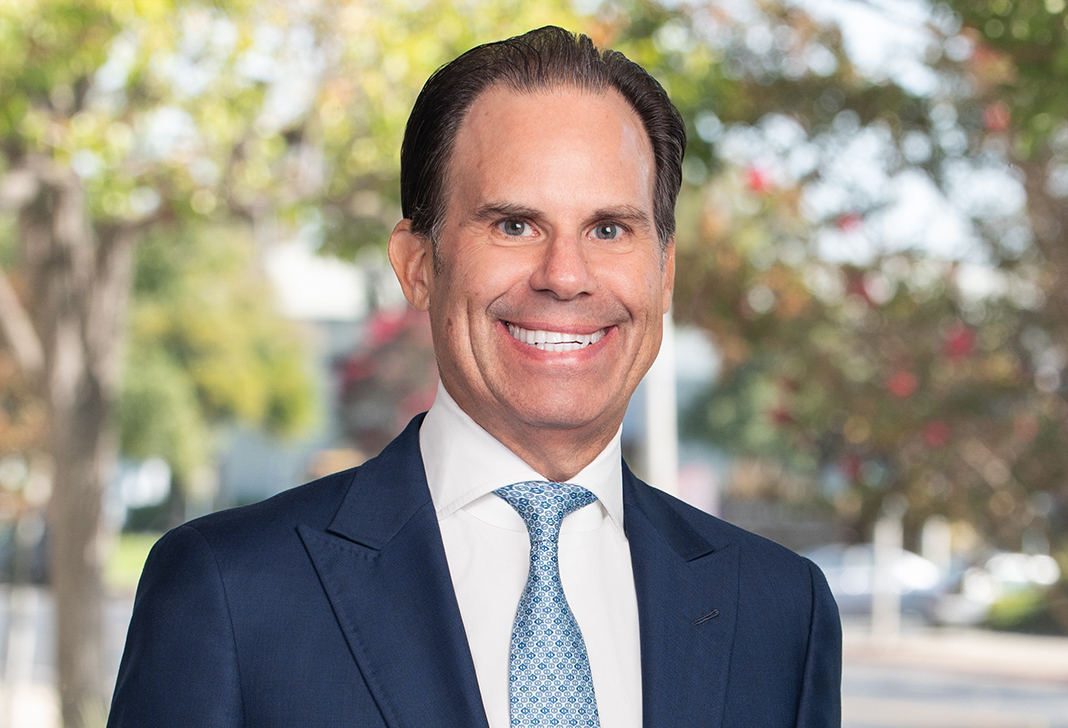
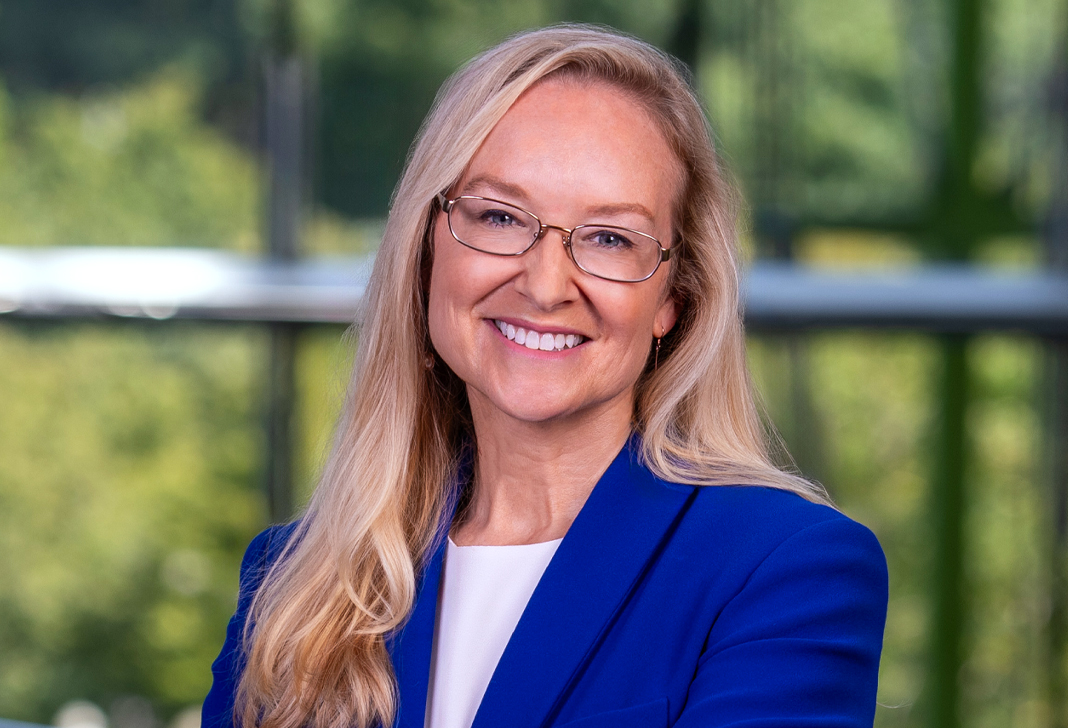
Early decisions relating to the legal structure of a start-up company can have profound tax and financial implications as the business expands, grows, and achieves liquidity. Jones Day partners Tim Curry and Lori Hellkamp talk about the benefits of the Qualified Small Business Stock (QSBS) exemption and how the correct structuring can significantly impact the eventual return to founders and investors.
Podcast: Play in new window | Download
SUBSCRIBE TO JONES DAY TALKS
Subscribe on Apple Podcasts
Subscribe on Android
Subscribe on Stitcher
Click here for the full transcript.
Dave Dalton:
Startup and early stage companies, and the people who launch and grow them, face thousands of decisions large and small as they fund, operate, and expand their businesses. But an early decision relating to the legal structuring of these entities can have profound tax and financial implications as the business expands, grows, and is possibly sold. Jones Day partners Lori Hellkamp and Tim Curry are here to talk about the Qualified Small Business Stock exemption, or QSBS, and how the correct structuring can literally be worth millions of dollars. Entrepreneurs, business owners, investors, keep it here. I'm Dave Dalton. You're listening to JONES DAY TALKS®.
Based in Jones Day's Washington office, Lori Hellkamp provides creative solutions to complex tax issues, with a practical approach to problem solving. Her practice spans a broad range of areas, including corporate international tax, M&A, and tax controversies. She has advised public and private companies facing a wide variety of multi-jurisdictional tax issues.
And Tim Curry, based in Silicon Valley and San Francisco, has for more than 30 years represented startup, emerging growth, and public technology companies, and public offerings, venture capital and growth equity financings, and mergers and acquisitions. Tim also represents leading VC firms in equity financings, as well as investment banks and public equity offerings. And if you're a regular listener, you know that Tim is a frequent and popular contributor to JONES DAY TALKS®.
Lori, Tim, thanks so much for being here today.
Lori Hellkamp:
Thanks for having us.
Tim Curry:
Thanks, Dave. Good to be back.
Dave Dalton:
Yeah. It's been a while for Lori. Tim, you and I have talked a few times recently, but we've got a great topic and it's good to have you two together to explain. So, lots to cover, so let's dive in. Let's go to Lori first. Lori, give us a high level view if you can, or high level description, of the QSBS exclusion. And explain what that was designed to do.
Lori Hellkamp:
Sure. So Section 1202 of the tax code provides a set of really favorable rules addressing what's called Qualified Small Business Stock, or QSBS. QSBS is probably how you're going to hear this benefit generally referred to. And these QSBS rules allow founders, and investors, and even employees, to potentially exclude some or even all of their gain from federal tax when they ultimately sell stock in a qualifying small business. And the underlying policy here is pretty straightforward. Congress wanted to encourage investment in startups and small businesses, and this provision has actually been around for ages, it came into the code in the early '90s.
Dave Dalton:
That's right.
Lori Hellkamp:
But there have been a couple of legislative changes recently, well, within the last 10 years, that have really juiced this provision. So it's gone from sort of an obscure provision that might occasionally apply, oftentimes sort of just because a founder got lucky, but it's now a really important tax planning tool for lots of investors and founders. We find, using it all the time, for clients. And the key changes were, in 2015, these rules were made permanent. Before that they kept sunsetting, so they'd be reinstated periodically, or reinstated retroactively. That's just hard to plan around. And then also, the corporate rate dropped to 21%, from 35%, in 2017. So those two changes together have made this just an incredibly powerful tool.
And it's powerful because of the sheer amount of gain that can completely escape federal tax now, when you ultimately go and sell your stock in these qualifying small businesses. And the gain that can be excluded is generally, it's the greater of either a fixed dollar cap or 10 times the investor's basis in that small business stock. And when I say basis, tax basis. So if you pay $10 for stock, your basis is $10, right?
Dave Dalton:
Right.
Lori Hellkamp:
So it's the greater of that, 10 times your basis, or the fixed dollar cap. The fixed cap rose from 10 to 15 million. So right now it's 15 million for stock issued after July of 2025. And that's going to be indexed going forward. And that is absolutely nothing to sneeze at, but the real potential here, as a tax planning tool, is on the 10 times basis figure because you can get so much more tax benefit out of this provision under that category. And that's what we're going to spend some time talking about today.
Dave Dalton:
Absolutely. And when I was doing some research after you, Tim and I thought about doing this program, I started looking up what this was and how it works and everything. I'm like, it almost sounds, and I hate cliches, almost sounds too good to be true. Right? But that said, it's true.
Lori Hellkamp:
You're not wrong. You're not wrong.
Dave Dalton:
Yeah, I know.
Lori Hellkamp:
It's a really, really good benefit.
Dave Dalton:
Yeah. But all that said, there have to be some requirements, or some guidelines, whatever, in order to qualify.
Lori Hellkamp:
Absolutely.
Dave Dalton:
Just broadly, what are those?
Lori Hellkamp:
Sure. There's going to be kind of four broad sets of requirements. I will say, because we are talking about tax here, we're talking at a high level about the general rules. There are going to be exceptions, and some nuances. We're kind of skimming over that because this is a very short, high level podcast. But with that qualifier out of the way, basically four kind of sets of requirements.
The first is that stock in your qualified small business must be issued by a US corporation, and specifically a C Corporation. The wrinkle here, slash opportunity here, is that when I say C Corporation, I mean C Corporation for tax purposes. So it can actually be an LLC, that has made a special election, to be treated as a C Corp for tax purposes.
The second main requirements involve the company itself. It has to be using its assets in an active operation of a qualified business. Basically, there is a statutory list of industries and specific types of businesses that are going to be locked out of this. Health services, financial services, hospitality. It's not really an obvious pattern why some businesses are in and some businesses are out, but as long as the business being operated does not fall on that list of disqualified businesses, then it's going to be at least potentially eligible and it's fair game.
Tim Curry:
And Lori, let me just chime in there. Most businesses and most venture backed businesses, particularly Silicon Valley tech companies, are not on that list. And so in other words, they are eligible for QSBS. So I just didn't want our listeners to think that that list is-
Lori Hellkamp:
Correct. Correct.
Tim Curry:
... sort of subsumes the whole, here. It's a pretty narrow list that, most likely Silicon Valley listeners will not fall on that list-
Lori Hellkamp:
Agreed.
Tim Curry:
... but they could. So -
Lori Hellkamp:
They could. You got to check it. And I'll also say, what constitutes a disqualified business or not can be a little bit gray, because the statute doesn't articulate clearly what exactly constitutes, for example, a health services business. And you can imagine in the real world, a business might have lots of operating lines, or there might be, "Well, sort of on the one hand, but on the other hand, it's really a software based product." So you can see how, in real life, facts aren't quite so clean. So we often find ourselves trying to figure out if a company and its operations fall inside or outside one of those listed businesses. But you're absolutely right. Particularly in Silicon Valley, most things are going to probably fall outside of the disqualified list.
Dave Dalton:
Is this occasionally litigated with the IRS? Does someone say, "We think this qualifies"? Is this an ongoing battle or is it pretty much settled at this point, what qualifies, what doesn't?
Lori Hellkamp:
You would think, since these rules have been around since the '90s, but recall, they weren't particularly helpful before nine or 10 years ago. So they haven't actually been... And as we're going to get to in a minute, you have to have stock that you've held for five years, generally, at least until recently. So these rules haven't been in place and been actively taken advantage of for long enough to generate much litigation. So there's some administrative guidance addressing exactly the kind of thing you're talking about, but generally, in both the judicial and administrative side of things, there just isn't a lot of guidance because these rules haven't really been used before 2015, 2017.
Dave Dalton:
I didn't know if we were done with requirements yet, Lori, because I kind of stepped on your narrative.
Lori Hellkamp:
No, no. This exactly why these types of conversations are fun, though, because there's so much to flesh out in each of them. I'll quickly tick off the other two so we can get to the more interesting stuff.
The final third and fourth requirements are that the stock itself needs to have been acquired directly from the company in an original issuance. So generally, this is going to mean it can't be purchased from another shareholder, or on the secondary market. And then the small business company actually issuing the stock has to have a total asset value at the time of that share issuance that's under some statutory cap. Otherwise, it won't be considered a small business. The asset ceiling for a company, though, was recently increased from 50 million to 75 million.
And then the last requirement is just that the shareholder claiming the benefit needs to be an individual, or potentially an individual holding the stock through a properly structured trust or partnership. They need to have owned the stock for a minimum holding period. And that used to be five years, and now it's between three and five years. The longer you hold it, the more benefit you get. By the time you hit five years, you're eligible for the 100% exclusion.
So those are the core requirements.
Dave Dalton:
But not that complicated. At least, the surface.
Lori Hellkamp:
Yeah.
Dave Dalton:
These are kind of how it's defined, and here's how it's supposed to go. Hey, back to Tim for a second. Tim, in your experience, and we know the type of work you do, and the companies you work with. But are most of the company founders, the people that start these companies, these startups and so forth, are they even aware of QSBS? Or is this news to them, potentially?
Tim Curry:
Great question, Dave. It constantly amazes me how few founders that I speak to at the outset of their founder journey know anything about QSBS. We always bring it up in our initial meetings, where we talk to a founder about, "Where are you in your organization structure? Have you thought about LLCs? Have you though about C Corps? And it does, again, it just amazes me that nine times out of 10, the founder says, "Well, we're going to do a C Corp." And that's because they're thinking ahead, about their future venture financings, and we'll get into this in a second. But they don't think about LLCs, and they don't think about QSBS.
There's very little information in the market about this, apparently. I'm hoping this podcast helps to cure that, but they don't come to us with QSBS questions. They don't come to us with LLC questions. It's, we are the ones that are raising it with them, and hopefully at least getting them to think about it. It's not always the right decision to start as an LLC and flip to a C Corp, but it oftentimes is. And it's certainly something that founders need to think about at the outset, and not just jump to the conclusion that, "Everyone's a C Corp, so I'm going to be a C Corp."
Dave Dalton:
Well, Tim, I see you every fall at FinAccelerate, in San Francisco. And Lori, you're there, right?
Lori Hellkamp:
Yep.
Dave Dalton:
And part of the agenda, you have these brilliant entrepreneurs. And you guys always talk about structuring, and how important that is, at a very early stage. What a service for these people, because they have no idea how this could implicate their investors later on, and themselves. So these are such important questions, and these are very smart people, but maybe they're so busy building a great idea or building out a great company, it hadn't occurred to them how they ought to structure.
Tim Curry:
Yeah. And the attributes that you mentioned, Dave, they're still the most important attributes to building a business, but keeping in mind the potential tax benefits is certainly a worthwhile exercise. And then, these founders can always make the decision to continue on their plan of being a C Corp, but they should at least be informed and think heavily about whether an LLC would be better.
Dave Dalton:
Nice segue, Tim. Let's pick up on that. Talk generally about the potential advantages of forming as an LLC, right at the outset. How would that work for a very early stage company?
Tim Curry:
So here's the playbook, Dave. If you form as an LLC at the outset, that enables you to then develop your product, start to market that product, and increase the value of the company before you flip to a C Corp. If you start out as a C Corp, you're going to be maxed out at the 15 million that Lori mentioned earlier, because at the very outset of your company, the company's worth essentially zero. We'll just call it zero. And so 10X of zero is zero, so 15 million is going to be the greater of those two. So you're going to get 15 million, and 15 million of tax benefit is nothing to sneeze at, it's pretty awesome. And if you went in and you didn't know anything about this, and then your accountant told you that 15 million you could shield, you'd be pretty happy. But if you could have shielded much more, you probably would have chosen to do that.
So rather than jumping in and doing a C Corp, and capping yourself at that 15 million at the outset, the playbook is you start as an LLC, you grow the business, you increase its valuation. And whether you can increase it all the way to 74.9 million, or maybe you end up flipping to a C Corp when you're worth 20 or 25 million, or 50 or 60 million. Either way, you're gaining a lot of benefit by having started as an LLC and then flipping to a C Corp later, and then moving into that 10X being greater than the 15 million.
So a quick example, and I already went through part of this, but if you found your LLC, and the company is worth zero. And then you grow it to, let's just call it a $60 million gross asset business, and then you flip to a C Corp at that point. If you own 100% of the stock, just to make it easy, you are going to at least be eligible, if you hold the stock long enough, you comply with all the other requirements of QSBS. By growing it to 60 million, if you own 100% of the stock of that entity, 10X of 60 million is 600 million. 600 million of potentially federal tax-free gain. 600 million is a lot bigger than 15 million, so the benefit is really clear.
There's a couple of downsides, though, to delaying the flip to a C Corp. And those are that you're also delaying the triggering of the three, four, and five year periods that Lori spoke about. So if you form an LLC and you don't flip to a C Corp for two years, let's say, you've delayed by two years the start of the three, four, or five year period. So if you sell your company within those two years, or let's say one year later, within three years. And you just flipped from an LLC to a C Corp, you're not going to get any benefit, because you won't have held the C Corp stock for long enough to get any benefit. Whereas, if you'd started as a C Corp, at least you would've gotten the 15 million.
So it's a little bit of a gamble, because you are delaying the triggering of those three, four, five year periods. I would say that's less important now, just because really good companies especially tend to stay private longer, and they don't tend to sell as quickly as prior generations of companies. So the odds that you will operate for say a year or two as an LLC, flip to a C Corp, start the time period, and at least get up to say the three-year period, are relatively high. But it depends on your business model, it depends on your objectives with this company. If you're going to sell it fast, you'd be better off, frankly, forming as a C Corp from the outset and triggering the beginning of the three, four, five year periods, and at least locking in your 15 million. Even though you won't be able to play for the theoretical 600 million benefit.
Dave Dalton:
And Tim, this can all happen so quickly. We're talking about these three and four and five year milestones, and so forth, and an entrepreneur has this vision. They've got a product, they're moving so quickly. It seems like you could get caught in the wrong structure if you're not really careful. And I'm going back to an earlier part of the conversation, but it seems like getting good advice so early on is infinitely important. We're talking about staggering amounts of money, potentially, if you're not structured properly?
Tim Curry:
Totally agree. And there's often, and Lori and I have both worked on client matters where this has happened, but companies have come to us and they're already a C Corp, and they're already developing their product and growing their business. And at that point, it's probably too late. It's almost certainly too late. So they made that decision, they became a C Corp, and there's nothing we can do because you can't go back and become an LLC. So the importance in this is thinking about this early, before you incorporate, before you form as an LLC, and just make the right decision as my example I hope illustrated, a little bit earlier on this pod. There isn't a wrong answer, because sometimes being a C Corp early will enable you to claim the benefits because of the triggering of the three, four, five year periods, versus an LLC. But many times the LLC will be the right structure. But the important thing isn't necessarily which decision you make, it's considering that decision, and based on the facts that you have and the advice that we can give, making the best decision you can make at that time.
Dave Dalton:
Let's go back to Lori for a second. Are there specific questions, or common questions I guess, the clients have when they're considering various structuring options? From your standpoint?
Lori Hellkamp:
There are a few things. First, they ask if there are other benefits to the LLC first approach, and the answer is definitely yes. And basically in the real world, startups generally are not profitable on day one. There's oftentimes a year or two where they're generating losses-
Tim Curry:
Or 20.
Lori Hellkamp:
... and if you are operating in LLC form, at least for one or more years on the early side, generally you're going to be generating losses rather than profits. And if you're in an LLC form, this offers the added tax benefit of those losses being able to flow up to the equity holder's personal return, so you're able to use those losses to offset income that you might have coming in from other sources. Whereas, if you form as a corporation, those first few years of losses are kind of all trapped at the corporate level, so you're not able to immediately utilize them and offset income.
You're also offsetting income on a personal return, that's likely at taxed at 37%, whereas the trapped losses going forward can be used, of course, by the corporation once it turns profitable, but it would be offsetting taxable income that's going to be taxed at 21%. So you get the time value of money, and offsetting income that's being taxed at a higher rate is just sort of an added benefit to doing this in the LLC form in those early years.
That said, I should caveat this by just flagging, that there are some limitations under the tax rules on how much of a loss can be utilized on an individual's personal return, but how these limitations actually apply depend entirely on each person's particular facts. So mileage can vary from founder to founder, and investor to investor.
Dave Dalton:
We've covered a lot of ground already, but a couple of more things I was hoping we could touch on, before we wrap up here. Tim, from a venture capitalist perspective, or someone who advises VCs, when it comes to structuring. Anything else business founders should know, at a very early, even the pre-formation stage?
Tim Curry:
Yeah. And it's interesting, because while founders don't seem to know or have much information on QSBS, the one thing that does seem to be known by founders is that VCs tend not to invest in LLCs, and strongly prefer to invest in C Corps. And that's true. I agree with that. But these days, where most companies are formed and then raise seed money through SAFEs or convertible notes, and only do their first priced round from VCs a year or two into their existence, you shouldn't let the VC's perspective on C Corps change what you do from day one through the beginning of that priced round.
The VCs will more than likely, because of their own tax structures, ask you to flip to a C Corp at the time of their investment. But it's really easy to flip the LLC to a C Corp, and you can do that just ahead of the closing of that first priced round through VCs. And then you will have ridden up the value to 20 million, 30 million, 40 million, before that priced round occurs and gotten the advantage of the 10X of those amounts from a QSBS perspective. And you'll still flip to a C Corp, which is what your VCs are going to want you to do. So you're having your cake, and then you're eating it too.
So the VC perspective on C Corps versus LLCs is true, but it still shouldn't impede you from starting as an LLC in certain circumstances, doing that for a couple of years, and then flipping to a C Corp and taking in your VC investment.
Dave Dalton:
That can be fixed. Lori, anything we haven't covered today, from a tax perspective? And again, a lot of information already, but anything you want to add before we close?
Lori Hellkamp:
I would just add one little tidbit, and that's that we've been talking today about this awesome tax benefit, but we are talking about the federal tax benefit. Not all states necessarily track this. So be aware, it's an awesome benefit, but depending on the state you live in, they may honor the exact same benefit or they might ignore it entirely. So it varies from state to state.
Dave Dalton:
Now that's interesting. I mean, not surprising, but you're right. We've been focused on the federal tax statutes and so forth, and where this might go. But there are certain states where they might say, "That's great, but not for us." Right?
Lori Hellkamp:
Yeah. California is one of them.
Dave Dalton:
Tim?
Tim Curry:
Yeah. There's a lot of QSBS in California. So I feel like if California provided the same benefit, it would greatly reduce the tax coffers of California. So I'm not surprised, but as high as the California state tax rate is, it's much lower than adding in the federal and still having to pay the California.
Lori Hellkamp:
Oh yeah, it's still much lower. It's still an awesome benefit. Yeah.
Dave Dalton:
And also, to Tim, as we're rounding up. Anything else you want to talk about from a real world perspective, issues you've seen company founders encounter, and what they ought to know now?
Tim Curry:
Yeah, I'm glad you asked, Dave. Thanks. The one thing, in the area of theory, but one that I've thought about a lot, although never had to actually confront. Is if you're playing the QSBS game, and you've done everything right, and let's say you're just about at year three. And you get an acquisition offer. And the acquisition offer is say at year 2.5, so six months before you'll get at least the first level of benefits under QSBS. Would you sell your company at year 2.5, and not get the QSBS benefits? Or would you wait and hope that that offer still remains six months later, when you've at least crossed the year three threshold? And the same question could come up right before year four, and right before year five, which is a quick reminder in year five you get 100% of the benefits, and so it could be very valuable.
Again a little in the world of theory, but I've often thought about, that it would be a really difficult decision. Do you take the bird in hand, sell the company at year 2.5, not get the QSBS benefits, but get the proceeds of the sale? Or do you roll the dice, try to delay that sale, try to keep that buyer on the hook. Maybe build your business a little more, and get other buyers on the hook, maybe even sell it for more, but there's always risk in delay. But do you try to get beyond that third anniversary of when you flipped to a C Corp, or formed as a C Corp before you sell, to take advantage of QSBS?
Just something to think about. Interesting. Hasn't come up in the real world for me, but I'm waiting for my first situation where we have to analyze this.
Dave Dalton:
Well, please let me know when that happens, because that's like the movie, right? It's like, "I got four months, and this could be really lucrative, but who knows what's going to happen? There could be a global recession, or something horrible could happen. There could be lawsuits. There could be all these horrible things could take us off track. But do I take this now, or do I wait for what's behind door number two? Interesting. Interesting.
Tim Curry:
It's kind of a different spin on something that happens a lot in M&A is, you're a hot private company, and you get an offer from a big public tech company for something that seems pretty outrageous, like a billion dollars. Do you accept that offer, or do you roll the dice and try to go public, and become the next multi-billion dollar company? And private companies go through this analysis all the time, in terms of making that decision. And this is just a nuance on that, which is, "And what about the QSBS?" Is that part of that thinking as well?
Dave Dalton:
Right.
Tim Curry:
So it's a different flavor of a very typical conundrum for very successful startups.
Dave Dalton:
See, that would be for me, the most fun part of your job. Because you almost have to play like psychologist, with this very successful business person, who's created something great. And, "I could cash in now, but it could be really, really better six months or a year and a half from now." That's fascinating stuff. And that's something that doesn't show up in the financial pages. You see the numbers, but there are very complex decisions going on, that involve emotions, and long-term planning and so forth. So, fascinating stuff.
Tim Curry:
I feel like it comes up in the movie or TV version of these various companies that have been depicted in film. It's a big dramatic moment for those movies, and it is a really interesting situation. And one of the things I love about founders is that, sometimes a billion dollars isn't enough, and they think they are onto the next great company. And why would they want to sell to big tech, when they could grow and become big tech on their own? A lot of us would say, "A billion dollars is enough," in terms of the company's valuation. But so many founders make the opposite decision, and shoot for the moon, and that's what makes working with founders really interesting.
Dave Dalton:
Yeah. You know what? And we're getting way off track here, but it's a different discussion. We probably ought to do a program someday because-
Tim Curry:
Let's do it. Let's do it.
Dave Dalton:
... at some point, it's not about just the money and creating value. At some point it's about changing things, paradigm shifting. "How great could I make this, and what can I do for this industry, or humanity even?" So, fascinating stuff, Tim. It really is.
Anyway, hey, great discussion today.
Lori Hellkamp:
Thank you. It was fun.
Dave Dalton:
To learn more about the QSBS exemption, visit jonesday.com, where you'll find complete bios and contact information for Lori Hellkamp and Tim Curry. While you're there, please visit our Insights page, where you'll find more podcast videos, publications, newsletters, news releases, blogs, and other timely information. Subscribe to JONES DAY TALKS® at Spotify, Apple, or wherever you find your podcast programming.
JONES DAY TALKS® is edited and produced flawlessly, no mistakes, by Mr. Tom Kondilas. As always, we thank you for listening. I'm Dave Dalton. We'll talk to you next time.
Speaker 4:
Thank you for listening to JONES DAY TALKS®. Comments heard on JONES DAY TALKS® should not be construed as legal advice regarding any specific facts or circumstances. The opinions expressed on JONES DAY TALKS® are those of lawyers appearing on the program, and do not necessarily reflect those of the firm. For more information, please visit jonesday.com.