JONES DAY TALKS®: Women in IP – Supreme Court Denies Review of Thaler v. Perlmutter: AI Authorship Questions Remain
Women in IP – Supreme Court Denies Review of Thaler v. Perlmutter: AI Authorship Questions Remain
In early March, the U.S. Supreme Court denied certiorari in Thaler v. Perlmutter, continuing the standard that only works created by a human can receive U.S. copyright protection. This raises complex questions as businesses continue to aggressively introduce AI to their processes.
Partners Meredith Wilkes and Emily Tait talk about what you should know in the current AI landscape, AI risk mitigation, and 10 years of “Women in IP” at Jones Day.
Podcast: Play in new window | Download
SUBSCRIBE TO JONES DAY TALKS
Subscribe on Apple Podcasts
Subscribe on Android
Subscribe on Stitcher
Click here for the full transcript.
Dave Dalton:
As corporations introduce artificial intelligence to processes, there's no doubt that efficiencies and productivity improve, but other questions are raised.
In early March, the US Supreme Court declined to hear Thaler v. Perlmutter, leaving in place a circuit court decision that artificial intelligence cannot be listed as an author for copyright protection purposes. That apparently with respect to wording in the 50-year-old US Copyright Act of 1976. So for now, the ruling leaves in place the requirement that creative works must have a human author to receive copyright protection.
So how do corporates respond? How are the potential risks mitigated? And what should interested parties expect next? Jones Day partners Meredith Wilkes and Emily Tait are here to sort out what you need to know. Stay here. I'm Dave Dalton. You're listening to JONES DAY TALKS®.
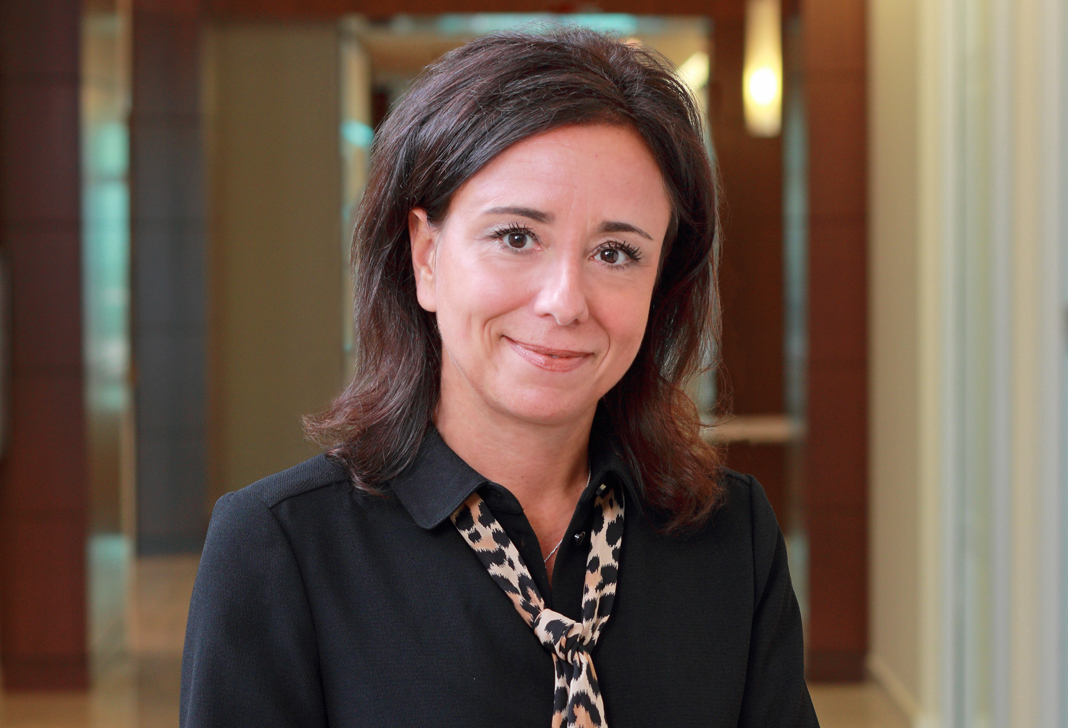
Meredith Wilkes is a first chair IP trial lawyer. For more than 25 years, she is focused on high-stakes trademark, trade dress, trade secret, false advertising, trade liable, and design patent litigation matters for global brands and courts throughout the United States. Meredith is a frequent speaker on trademark and advertising issues, and she sits on both International Trademark Association and Intellectual Property Owners Association committees. She chairs Jones Day's Women in IP Initiative, which we'll talk about shortly.
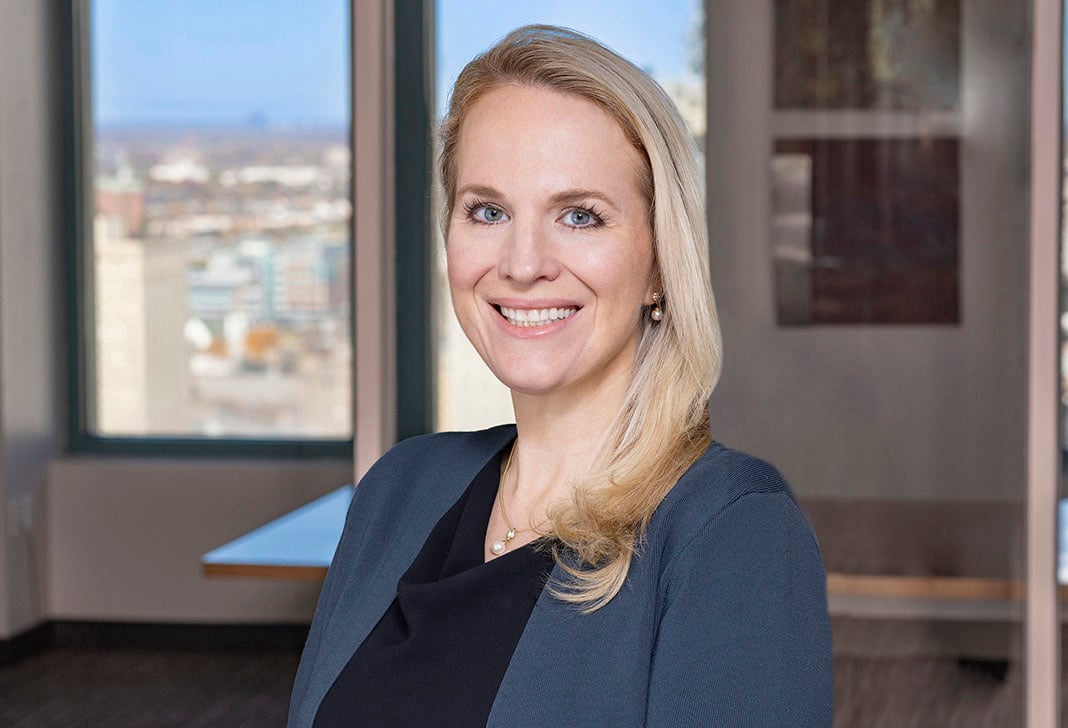
And Emily Tait is an IP technology lawyer with notable experience in AI and generative AI. She helps clients navigate the complex and evolving legal and regulatory AI environment, provides AI-related risk assessments, and devises strategies to protect and enforce IP rights in the age of AI. She serves on Jones Day's Global Team and Technology committee, and she co-chaired the Michigan Judicial Council's working group on generative AI.
Meredith, Emily, thanks for being here today.
Meredith Wilkes:
Thanks for having us, Dave.
Emily Tait:
Yeah, thank you so much.
Dave Dalton:
Yeah, again, and we keep doing this and every program gets more interesting, and we've had a development or a non-development, depending on your point of view, recently on a matter, a situation we've talked about before. So let's start with Meredith. We've talked about Thaler previously, but can you give us a quick summary of what that original case was all about?
Meredith Wilkes:
Oh, sure thing.
So this gentleman, Mr. Thaler, is a computer scientist who invented an AI machine called the Creativity Machine. And that's the plain English version for what it really is. It's DABUS, and Emily knows the ins and outs of the intricacies of this AI machine. But he created this machine, and the machine, in turn, produced an image called A Recent Entrance to Paradise. And this image was then the subject of a copyright application. And the copyright application was presumably prepared by Thaler, but the author was listed as the machine, The Creativity Machine. No human was listed as an author of the image, and so the copyright office refused registration on the grounds that there was no human authorship. And Thaler then sought reconsideration and the board said, "Nope, no human authorship. That's a required element under the Copyright Act, so no copyright registration for you."
The matter then was appealed into the United States District Court. And on summary judgment, the district court found in favor of the government and said, "Absent a human authorship, there is no copyrightability here. You will not get a copyright registration." The Court of Appeals affirmed, cert petition was filed, and then last week the United States Supreme Court denied cert. So that's where we are with Thaler, but obviously it sparked a lot of folks coming out and a lot of people writing on different sides of the equation and why we're all sitting here today having this good discussion.
Dave Dalton:
Yeah. On the original decision, the DC Circuit called the human authorship requirement, I'm quoting here, "A bedrock requirement of copyright." Is that aging well?
Meredith Wilkes:
That's an excellent question, Dave, and you've got folks on both sides of that issue. We've talked about this, you, me, and Emily together, about how the Copyright Act doesn't specifically call out a human author, but for the most part, there is some consensus that if you read the Copyright Act as a whole, there is a human authorship requirement by virtue of the fact that for the term of the copyright registration is tied to the life of a human, only humans can own property. So there is some form of consensus that there is a human authorship requirement, even though the word human author doesn't appear anywhere in the Copyright Act.
Dave Dalton:
Let's go over to Emily for a second. So last week, Supreme Court doesn't want to hear about it. They're leaving it as is. DC Circuit's ruling that Copyright Act requires copyrightable works be authored by a human being. Emily, how significant is this right now? It seems like it's time for some clarity.
Emily Tait:
Yeah, clarity would be nice. We're living in a gray zone, and that's going to continue for the foreseeable future.
In terms of the Supreme Court's denial of cert, that was very much expected. And in terms of its significance, you could say it's either really significant or not insignificant at all. And the reason I say that is that the question presented is actually quite narrow because Dr. Thaler was really trying to push the envelope here in the sense that his copyright application listed his machine as the author. In other words, there was no argument that there was a human contribution to this work. He was trying to get to the point that an AI-generated work without a human contributor should be eligible for copyright protection under US law.
So that's pretty narrow because the broader question is how much can an AI assist a human in his or her creation? And we know that technology and AI can assist human creators and their creation of copyrighted works. So the question presented to the court and the issue raised by Dr. Thaler was rather narrow in that regard. And so to that extent, it's not that significant because it affirmed what Meredith was describing, this, call it a bedrock principle or use some other phrase for that, but it's been long-established that there is this human authorship requirement in copyright law.
So the reason, though, that it is significant is because it just leaves this ruling in place, and then more importantly, leaves us in this world of the gray zone that we all need to live in. And no one likes to live in the gray zone. It'd be great if we had bright-line rules. It'd be great if we knew exactly where you could obtain copyright protection for a work. Those bright-line rules would be really helpful. Unfortunately, they don't exist-
Dave Dalton:
Sure.
Emily Tait:
... and I don't know that they will exist anytime soon. So that's where we are.
Dave Dalton:
Can you think of an example? As an IP lawyer, has there ever been an instance where things weren't clear and there was confusion and clients had questions, and then a year, two years, five years down the road, whatever, suddenly it's like we've figured this out? Is this unprecedented or is this typical in copyright law that there's ambiguity? Now, AI is different level, of course, but does this happen in IP law?
Emily Tait:
Yeah, it certainly happens in IP law and it's pretty standard in copyright cases, especially cases involving really complex issues, which tend to be the types of cases that we get at Jones Day.
Dave Dalton:
Sure.
Emily Tait:
There could be a simple case of copying a work that had been registered with the office and somebody just cuts and pastes it, copies it and distributes it, and there you have it. So that's a relatively straightforward scenario. But the more complex cases always raise a lot of ambiguity in terms of, and let me give a great example, would be just fair use. And that doctrine under copyright law is notoriously fact-specific and notoriously very, very difficult to provide clear guidance to clients on. And so those kind of cases often deal with the nature of the work and-
Dave Dalton:
Sure.
Emily Tait:
... how much was copied and whether it was ultimately for a transformative purpose, et cetera. So those ones tend to be very murky. And it is why when these kind of complex disputes arise, obviously getting an excellent advocate is really important because you're going to want to eliminate those ambiguities and try to present a really clear case to the court, but it often involves this gray area and a lot of murkiness.
Dave Dalton:
Well, so thank you for the segue. That's perfect because I'm wondering what the practical implications are for clients as we sit here in the first half of 2026. What do you tell them?
Emily Tait:
Yeah. Well, it really depends on the client and the situation that they're dealing with, whether they're a creator looking to use an AI tool to enhance their ability to create, whether they're also analyzing potential issues of infringement or accusations from a third party that something they've done might be infringing, et cetera. But in terms of, if you're talking about the situation that's analogous, we are seeing a lot of questions about clients who are really intrigued by generative AI tools and really thinking, how can these tools be used to enhance our human authors, our workforce, our company's creative output? And what do we need to do to ensure that we are creating things that are sufficiently tied to a human author that we will be able to not only obtain copyright registration in the US, but also then prove that a human contributed to that particular work?
So there's a lot of questions on that. So how to navigate that really depends on the company and the nature of the work being created, but practically speaking, starting to think about those issues. Particularly if AI or generative AI technologies are being used to enhance an IP portfolio, you're going to want to think about those issues and have a strategy in place.
Dave Dalton:
And is it a matter of degree, at some point is someone going to be asked, "Hey, was the human authorship 51% or more?" I don't mean to, again, to make this too simple, but I'm wondering who decides what's enough human authorship, creativity, interaction? I wonder where that goes.
Emily Tait:
Yeah. And I don't think there will be a clear percentage issue. It's, number one, copyright law has been very resistant to ever attach exact weighting to particular things. Again, referring to the fair use doctrine, that there's four fair use factors and courts are to consider those, but they're not necessarily limited to those factors. And they also can consider other factors, and how they weigh the factor's up to the court's discretion based on the circumstances of the particular case.
So those bright-line rules of establishing 51% is not really going to be the key question. It's going to be a more complicated analysis in any particular instance to really try to create that nexus between the human author who is essentially using AI or any technology tool to enhance his or her creative output. And if there is not a human author who can clearly articulate that this is the product of his or her creativity, their ingenuity, their intelligence, that if they can't articulate that clearly, they start to get in trouble.
And so it's very tough though because these technologies are getting increasingly more sophisticated. And anything involving AI is under a significant microscope right now.
Dave Dalton:
Sure.
Emily Tait:
And so that makes it difficult too.
But just to give an example, photography, you're using a machine. You're using your camera. Photography is protected. You can create photographs that obviously are protected by copyright, and a human author can then use a variety of tools to edit that output, which in that case is the photograph. So whether it's with filters and whether it's with Photoshop and other things, you can fine-tune that and still have protection.
So in the context of AI, it's going to be really tricky that human authors certainly can use AI technologies and be assisted by them, but unfortunately, trying to predict right now what amount will satisfy that requirement is a fool's errand. It'd be tough to really provide that guidance-
Dave Dalton:
Sure.
Emily Tait:
... without knowing more about the particular work and the human being's contributions to that work.
Dave Dalton:
Let's go over to Meredith for a second. From the brief, I'm quoting, "Continued silence by the court on this issue is no longer helpful." Meredith, what does it take for us to get to a point where there's some clarity, some predictability at least? This is not going away. It came faster than we thought. Insert your other cliche here. But what will it take? Do we need more case law? Does Washington need to get involved from a legislative standpoint? Or what do you think could happen to give people some comfort and a feeling of here's what I can expect?
Meredith Wilkes:
All excellent questions as always, Dave. And for now, the only certainty is uncertainty. You said insert cliche here, so that's what it's going to be.
Dave Dalton:
There's no... Good one.
Meredith Wilkes:
That really is the only certainty at this point.
It's interesting, there are a number of different briefs filed on the cert petition to be sure. And when you read the solicitor's paper versus the positions advocated by some of the amici, it's almost as if there were two different fact patterns in front of the court where the solicitor positions it, the same way that Emily described it, on this very narrow issue about whether the machine listed as an author is copyrightable subject matter under the Copyright Act. Whereas the amici are going a little bit more broad and talking about some of maybe what they believe to be the overarching policy implications that could be in play here, that if we don't protect AI, that we're lagging and that the constitutional mandate of protecting the arts and sciences is not being upheld.
But at this point, there's no circuit split, which is usually one of the things that we're looking for with a Supreme Court cert petition. This is one court of appeals decision on a very narrow issue, which was decided on by a district court at summary judgment. So we don't even have extensive fact-finding on this particular issue. IP statutes in general, whether it's a copyright application, a trademark application, a patent application, by nature have to have some ambiguity. There has to be some gray area to allow for the promotion of arts and sciences, to allow for innovation. So there is always going to be some uncertainty in my view.
Your jurisprudential viewpoints on the role of the courts versus the role of the legislature may impact how you view what the right course is. Some of the amici briefs said that this is actually a constitutional issue that only the Supreme Court can address because it deals with the constitutional grant of copyrights as opposed to something that Congress should be addressing. But right now, we know we've got guidance from the copyright office that talks about how you need to consider the nature and extent of the human interaction. And we have a copyright statute that, at this point, Congress has not seen fit to amend and the Supreme Court, at least for now, has declined an invitation to give any guidance on.
And so shameless plug for us, but that's why you need good counsel on these issues.
Dave Dalton:
Of course.
Meredith Wilkes:
And it really is because there is no bright-line rule here, and so you need help to navigate in this space.
Dave Dalton:
One of the great things about being a layperson and not being a lawyer and doing this program with you two is that I get to ask the naive questions. I always wonder, when you get something very techy, very intricate, very high level, do the people in Congress maybe not understand yet what the implications are? I know they have staffs and they have people that are smart working for them, whatever, but is there some hesitation where maybe they wouldn't want to touch this quite yet, wait and see? I'm sorry, this is getting a little almost political or commentary-like, but I wonder sometimes, this is so big and people are so interested, you'd think there'd be some action, whatever's going on in Washington right now.
Meredith Wilkes:
Yeah, that's a tough one, Dave.
Dave Dalton:
Yeah.
Meredith Wilkes:
At least where we are in the political climate right now, just from my two cents on this, getting Congress to agree on anything is no small feat. And if we think about from some people's vantage, maybe the list of priority items, maybe this one doesn't get up as high as some of other issues that, funding and things that get people elected.
But yeah, these are good questions. I don't know. Obviously for us, the IP law nerds that you have here in the podcast today, this is sexy stuff and really important for us, but I know we probably are not the entire population that is electing these people to Washington. But there are so many different views on who should be taking the pen and what should be coming out of that pen. Is it fine the way it is or should there be legislation? Should there be additional guidance or, as the amici said in some of the briefs, this is something that only the Supreme Court can address because it deals with the constitutional grant to promote the arts and sciences through the copyrights and patents?
Emily Tait:
I was just going to say, it's interesting, there's never been a more interesting time for copyright. The number of questions and interest and excitement and concern, it's just really significant because there's all these really significant issues that AI is really pushing the envelope on and pushing these conversations to the forefront. And it's been gradually happening, but with generative AI over the past few years has pushed those conversations to the forefront. I've never seen more questions about copyright in my career, especially as it intersects with high-tech. And it just really depends on a company's risk profile, the type of innovation and creation that their personnel is engaged in, the types of use cases they're imagining. What kind of works are they creating? How do they want to use AI or generative AI tools to accelerate their innovation?
There's so many questions right now. And going back to your question, Dave on, is it a wait and see? Sometimes it is because people get really excited about it and they realize they may have a really strong knee-jerk reaction and think, "Well, of course an AI can't create. That's absurd." And then they see what the tools can do and they go, "Okay, wow. Maybe an AI can create something. And if it's created something for our company, shouldn't we have some type of rights to it?" Their thinking on it changes, and then they think, well, but still, a human being should be in the driver's seat there. And so then the question becomes the humans in the driver's seat, but then using the AI, how are they using it? And then how are they logging that human contribution to show that the human is in control?
So there's a bit of a wait and see because everyone is just sort of– They have an opinion, and then something else happens and then it alters their opinion. And so maybe there's a bit of this wait and see and maybe there's a bit of a, "Well, not it. We'll see who's going to decide and weigh in on that," which is why there will be a lot of disputes and we'll see courts ultimately making calls. And whether that's judges or juries, how these issues are addressed, it'll inform our collective thinking and provide some guidelines and provide some way of thinking about the issues. But we're a long way off to any type of true clarity.
Dave Dalton:
I know. I sense that.
Okay, and we're going to talk about Women in IP. 10th anniversary, by the way. But I do have one more question. Again, I apologize for veering off our notes and what we said we were going to talk about, but so we're in this period of we don't know. This fog, if you will, almost. What about risk mitigation? And this could be a whole separate program, I know, but are there things companies should be doing right now to make sure we don't run afoul of when these final regs come down or however this is decided? How do you stay careful and stay out of trouble?
Emily Tait:
Yeah, in terms of risk mitigation, there's lots of different risks that we could be talking about here. And if you're talking about the risk of potential infringement, that is probably a conversation for a different day just because that's an immense conversation.
Dave Dalton:
Sure.
Emily Tait:
But if we're talking about the risk of an AI-assisted work not passing that threshold and not being eligible for copyright protection because it doesn't meet the human authorship requirement, that there are a number of things that a company or an individual can do to mitigate that risk. One is just having their eyes wide open that we have a human authorship requirement. And so understanding that merely inputting even a really great idea into a generative AI tool without more is highly unlikely to meet that requirement.
And the US Copyright Office provided some guidance on this, and that guidance is available online, but gave an example of a very detailed prompt into a generative AI tool. Very detailed. You have a great idea, give me an image, here are the details for that image and that output. Copyright office says, "Without more, just a great idea is not eligible for copyright protection." The office goes on to provide other ways in which you could input something, though, that is itself eligible for copyright. So let's say you sketch something in your office, beautiful sketch, you authored it yourself, you input that into a tool, and you ask the tool to do some enhancements or some things. The office says, "Well, that could be eligible, provided that the AI contributions are disclaimed from coverage."
There's a lot of different variations on this, though. Again, very tricky to know the exact meets and bounds of when it's going to meet that standard. But ultimately, a human being, a human author needs to be in control, driving the ship on the ultimate output of creativity. And you're going to want to be able to show that. If push comes to shove and you're trying to get a registration with the US Copyright Office, AI is a hot-button issue right now.
Dave Dalton:
Sure.
Emily Tait:
And so if you're going to have to disclaim what the AI did, you're going to have to understand what you did and you're going to have to have that clarity, because otherwise I don't think it will pass muster. And then if you were in a disputes context, obviously also being able to prove what you contributed because that human authorship requirement is in place, and for the foreseeable future, it will be.
Dave Dalton:
The three of us have done probably, I don't know, 10 podcasts at least. I remember the good old days, we were talking about the monkey selfie in the blurred lines thing. I understood these things, AI. But anyway, I've got a feeling there are many more conversations in the future with us, talk about AI as this whole massive picture unrolls. So it should be fun to watch.
I did want to talk, we've got a few more minutes, I did want to talk about Women in IP. Last week, Meredith and I were on the phone talking about while we were planning this program, and she said, "By the way, Dave, Women in IP is turning 10 years old in 2026." So congratulations, first of all, Meredith, Emily. But tell me, for people who don't know... I know. You guys sent me a mug one year for Christmas. It says Women in IP. I know all about Women in IP, but for people who don't know, talk a little bit about the group, how it was founded, what it does, and what we're doing in 2026.
Meredith Wilkes:
Absolutely. And thank you. But first of all, Dave, anytime that you can mention Naruto in one of our podcasts, I always just smile.
Dave Dalton:
I always tell you, that was your Sergeant Peppers. That was your Exile on Main Street, your masterpiece.
Meredith Wilkes:
But thank you for the shout-out on Women in IP, and we are super proud to have just recently celebrated, I guess, our 10th birthday at the 2026 Partners Meeting.
Dave Dalton:
Wow.
Meredith Wilkes:
Our group started at a partners meeting in 2016. And I'm not breaking any news headlines here when I tell you that obviously the IP in particular is a field where women have been historically underrepresented. And we got together in 2016 just more as an informal lunch than anything else. I said, "Let's get our women IP partners together, have lunch, and talk about the world." And started gathering folks and had to keep adding tables to our lunch and adding tables to our lunch, and looked around at all these incredible people and said, "We have such an amazing story to tell about all of our women in IP. And while maybe it's underrepresented elsewhere, it sure is not underrepresented here. So let's take this amazing collective group and see what we can do to address the historic underrepresentation of women in intellectual property."
And that's where it started. And since then, it has grown really into an initiative that's not limited to women, not limited to IP lawyers. And our mission to address the underrepresentation has really been tremendous. We do it through networking, through mentoring, and through our CLE speaker series. And we've been offering programs since 2016, three or four or five, just depending on the particular year, through all different types of IP issues, leadership issues, hitting all the different disciplines of IP. And it's been tremendous.
Dave Dalton:
Well, and congratulations. 10 years, that's no small thing. You can get by for a little while on adrenaline and enthusiasm and yay, but to pull something off like that, 10 years running, you bumped into COVID, there are always leadership changes in a big law firm, et cetera, to sustain that, Emily, Meredith, congrats to you both. That's great work.
Emily, what kind of feedback do you hear from people who've attended the programs or who are part of the Women in IP group at this point?
Emily Tait:
Yeah, first of all, kudos to Meredith. This is her brainchild, and I've been lucky to participate as a speaker and also as an attendee since I joined the firm nine years ago. So it had just started a year before when I joined the firm.
But the feedback is just overwhelmingly positive because the programs are fantastic and they cover really the full spectrum of IP issues. And that's a really great thing about our IP practice and the women lawyers who practice in it. So patent issues, copyright, trademark, trade secret, IP advocacy, both at the trial level and at the appellate level, so we just cover a lot of interesting topics and that, as a result, have gotten great feedback. And it's also reflected in the fact that our attendee list keeps growing. And so we have a loyal group of clients and contacts who tend to log on to listen to the programs. And it's just been overwhelmingly positive, so it's been a lot of fun to be involved in it.
Dave Dalton:
Well, keep doing what you're doing, both of you, because obviously it's been successful.
But let's close with this. Meredith, what's on the calendar for 2026? And we don't need to drill down. I know you've got at least four programs this year, but generally speaking, what are you planning for the rest of the calendar year?
Meredith Wilkes:
We do. And as a matter of fact, Emily's leading the charge for our program on March 25th, which in a very timely fashion is, of course, addressing the AI copyright issues that you heard us talking about briefly during the podcast today. So March 25th is our first program of 2026.
Dave Dalton:
Nice.
Meredith Wilkes:
And then in June, we will do our View From the Top program. In the fall, we will do a program on IP remedies, and then we will round out the year with the 12 days of Trademarks. And then if stuff comes up in addition to those four scheduled programs, we're going to jump on it. Hopefully, you'll have us back to talk about some issues-
Dave Dalton:
For sure.
Meredith Wilkes:
... in the podcast space. But also if things come up, we'll do additional CLE programs, but for sure we've got four on the books right now.
Dave Dalton:
Awesome. Well, congratulations, and I really mean that. I know how hard it is to sustain something like that.
Meredith Wilkes:
Thank you.
Dave Dalton:
So you've done a terrific job. And I remain impressed. So thanks so much for everything you're doing.
That's going to do it for today. Great program. Emily, Meredith, thanks for being here. We're going to do this again in about two and a half months or so, and we'll talk to you then, okay?
Meredith Wilkes:
Sounds great, Dave. Thanks so much for having us.
Dave Dalton:
Meredith, thanks.
Emily Tait:
Yeah, thank you.
Dave Dalton:
Emily, thank you too.
Emily Tait:
Take care. Thank you.
Dave Dalton:
For contact information and complete bios for Meredith and Emily, visit JonesDay.com. Please contact Meredith directly for information specific to Women in IP programming.
Also at JonesDay.com, check out our Insights page, where you'll find more podcasts, videos, blogs, publications, newsletters, news releases, and other timely content. Subscribe to JONES DAY TALKS® in your favorite subscription platform to make sure you don't miss the program.
JONES DAY TALKS® is produced flawlessly by Tom Kondilas. As always, we appreciate your listening. I'm Dave Dalton. We will talk to you next time.
Speaker 4:
Thank you for listening to JONES DAY TALKS®. Comments heard on JONES DAY TALKS® should not be construed as legal advice regarding any specific facts or circumstances. The opinions expressed on JONES DAY TALKS® are those of lawyers appearing on the program and do not necessarily reflect those of the firm. For more information, please visit JonesDay.com.