JONES DAY TALKS®: The CATO Regime: Bringing Competition to Electricity Transmission
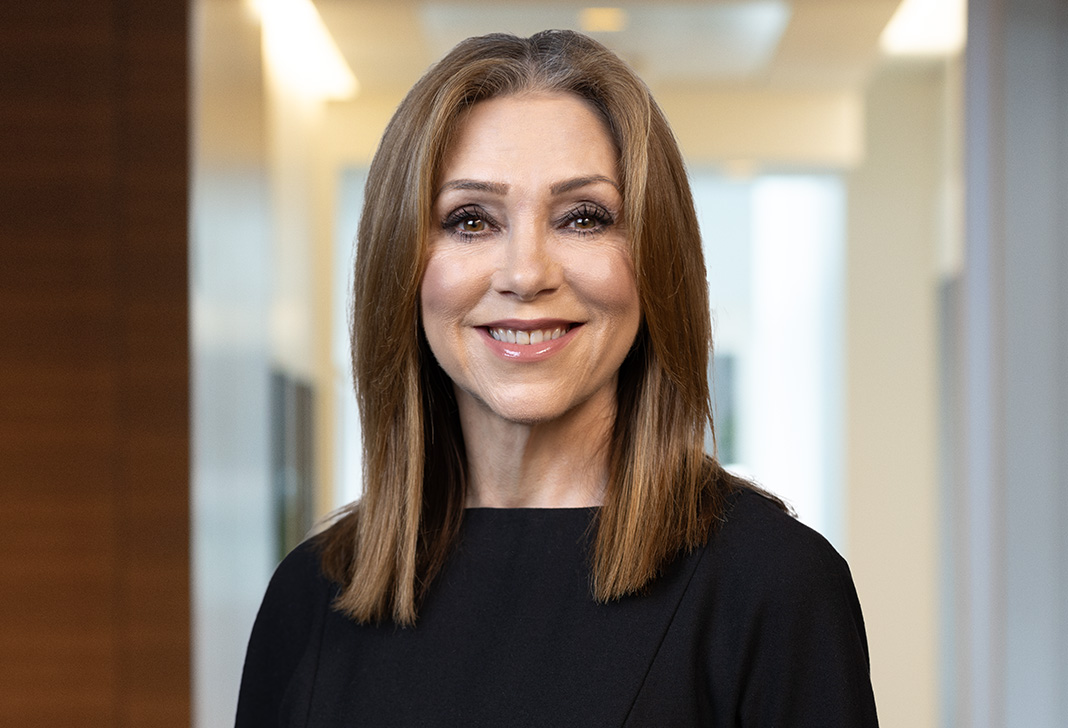
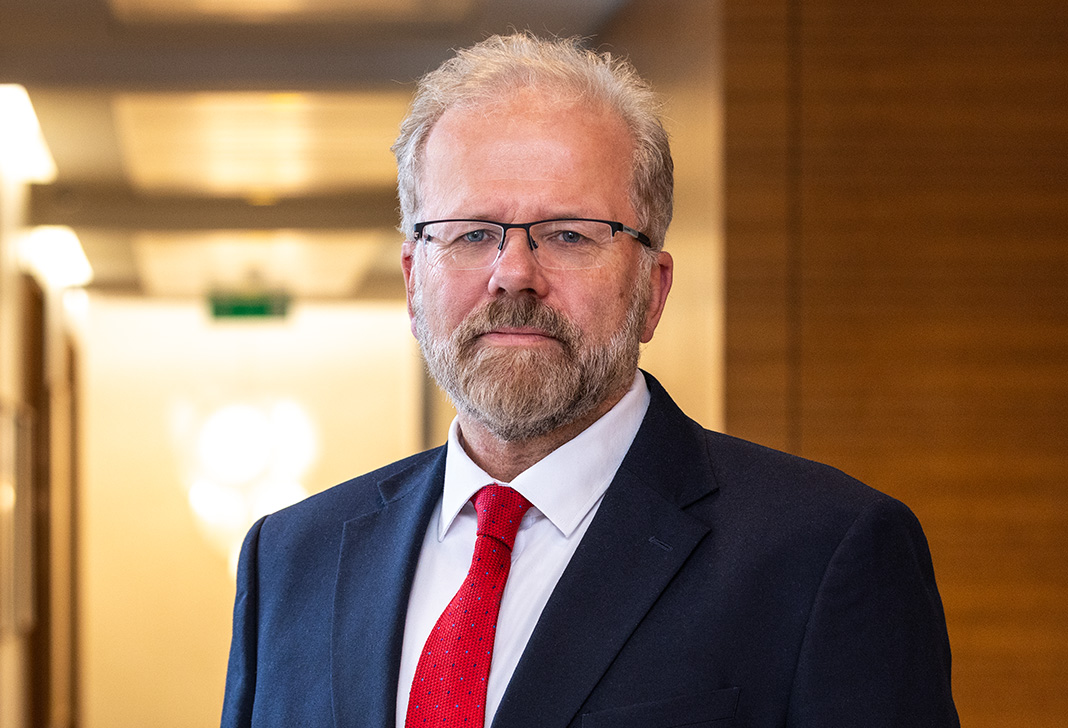
Jones Day partner Michelle T. Davies and counsel Martin Stewart-Smith lead a panel discussing the United Kingdom’s CATO regime (Competitively Appointed Transmission Owner): what it is, why it’s relevant in the current energy and infrastructure landscape, and what it potentially means for investors and other stakeholders.
Podcast: Play in new window | Download
SUBSCRIBE TO JONES DAY TALKS
Subscribe on Apple Podcasts
Subscribe on Android
Subscribe on Stitcher
Click here for the full transcript.
Dave Dalton:Welcome to JONES DAY TALKS®. Thanks for joining us today. You're going to hear Jones Day partner Michelle Davies and her panel discuss the UK's CATO, that's competitively appointed transmission owner, what it is and why it's so relevant in the current energy infrastructure landscape, and what it means for investors and other stakeholders. I'm Dave Dalton, you're listening to JONES DAY TALKS®.
Michelle Davies:
Hello, my name is Michelle Davies and I'm a partner with Jones Day. I sit in the energy transition team and I specialize in energy transition as I have done for 25 years. And I'm really delighted to be chairing this podcast today where we are going to talk about the CATO regime and we'll explain what a CATO is very shortly. But first I would like to introduce my fellow panelists. And so Martin, would you like to say hello?
Martin Stewart-Smith:
Yes. Hello. My name is Martin Stewart-Smith. I'm a energy lawyer of over 35 years experience, including specifically in transmission and regulation as well. So I'm very glad to be part of this discussion today.
Michelle Davies:
Thanks, Martin. Martina.
Martina Lindovska:
Thank you. Hello everyone. My name's Martina Lindovska. I'm a managing director at FTI Consulting, and I've been working as an energy economist for nearly 17 years with a particular focus on transmission, onshore, offshore and interconnectors.
Michelle Davies:
Thanks very much. And Ljubo?
Ljubo Mitrasevic:
Good afternoon. My name is Ljubo Mitrasevic. I'm a senior director and FTI chartered engineer and with experience working both for the network companies, regulators, policymakers, on range of the topics that cover transmission and distribution network.
Michelle Davies:
Thank you very much. So I've got to admit, Martin, as you know, I've not stayed as close to the CATO program as you have. I do know that Britain is going to have an enhanced increased energy demand and therefore is going to need more electricity transmission. The system operator in its June update recommended almost 64 billion of investment by 2030 across onshore and offshore transmission infrastructure and 89 billion beyond 2030. Now these are eye-watering amounts. Traditionally, these would all be built by the incumbent transmission operators, but Ofgem is introducing a new mechanism. CATO, competitively appointed transmission owner. Martin, can you please give us the simplest definition of CATO? And importantly, why is it relevant today?
Martin Stewart-Smith:
Yeah, thank you, Michelle. Basically, you've hit exactly the nail on the head. It's the tremendous demand for new investment in onshore transmission. And what CATO is, as you've said, competitively appointed transmission owner, is a mini TO effectively, where you get a license to design, finance, build, own and operate an onshore transmission asset. And it'll be awarded via a competitive tender process under the watchful eye of NESO as the delivery body rather than simply handed to the regional incumbent transmission owner.
Michelle Davies:
So as I just mentioned, the whole CATO regime is new. Martina, is that the case though? Are there people who are used to this kind of structure?
Martina Lindovska:
Good question, Michelle. So CATO regime really is just a variant of a third-party developer and owner of the transmission network. And we have precedence for that both in the UK and internationally. So the offshore regime is one example of independent transmission owners. Interconnectors more generally can be developed by third parties. And there are other jurisdictions where it's quite common for non-incumbent transmission operators to develop merchant transmission lines. And North America is probably the prime example of it where we have effectively independent developers building transmission lines.
Michelle Davies:
Right. Okay. So what is the value of economic competition? Because I said earlier that this could have all have just been built out as usual. Why does Ofgem want to introduce it?
Martina Lindovska:
So economic theory tells you that competition will bring innovation, better quality, lower costs, and lower prices ultimately for consumers. And that's very hard to achieve in a monopoly industry like electricity transmission. So what Ofgem is doing here is effectively introducing a workaround, if you like. They're introducing a competition for the market as opposed to within the market. And the reason they do that is, as you said, Michelle, those are tens of billions of pounds of investment that are on the line here. And Ofgem is trying to find ways to keep control of the cost so that they keep a lid on the consumer bills.
Michelle Davies:
Yeah. And I guess, Martina, it opens up a significant investment opportunity for the kinds of clients that we work with.
Martina Lindovska:
It does. And so what Ofgem really wants to do here is to really attract new fresh blood into the industry. So what they're trying to do is to broaden those delivery and supply chain activities. They want to attract new fresh sources of capital and diversify what they call execution risk.
Michelle Davies:
Yeah, 100%. And Ljubo, obviously you come from an engineering background. Take us through how transmission is actually developed and what does it take? If you're at point A and you want to get to point B, what does it take to get there?
Ljubo Mitrasevic:
Sure. So from engineering point of view, developing and building transmission, that's kind of a long game from electricity network commissioners for government concluded that it takes like 10 to 14 years to develop the project. And it's got a significant kind of steps that you need to follow of sequence from the need optioneering, developing, design, then you need to secure the land or then procure equipment, construct, commission, and operate. But when you look throughout that sequence, the two kind of areas where I feel there is a particular challenge in developing transmission are consenting and also procurement. Just to give you an indication, there was a research from 2021 until now that lead time to procure and buy transformer, which is a basic kit needed to develop transmission time doubled. And in similar fashion, the number of projects that we believe are needed for the UK transmission network are high-voltage direct current kits for which the kind of lead times are beyond five years.
And to put it into perspective, we have recent experience from Scottish and Southern as a transmission owner where they signed a contract with Hitachi Energy January this year just to reconstruct and design for the assets that will be developed post 2030. And when you consider they will be named as a preferred bidder 2023, that gives you a seven-year period for the existing project, just as indication how long it will take. However, it's worth noting that when we are considering CATO from the point of developing a transmission network, it is kind of not only parallel options to the current regime, but it's also useful comparator that it could enable Ofgem to compare and see how the network is being developed independently outside of incumbents who have traditionally occupied this space and from the point of a monopoly developing. So that's basically the engineering take when we can see the CATOs.
Michelle Davies:
And so Ljubo, I'm going off piece a little bit here, but is this sort of an entirely new thing or will those that will be bidding on these projects have sufficient expertise from other things that they've done to be able to do this profitably, I guess, from their perspective?
Ljubo Mitrasevic:
So the expectation here is from technical point of view, they will first introduce the new ways of doing things. When the need is identified solution, it's not necessarily developed by incumbents. So they will have an opportunity to develop innovative solution that could either bring the cost efficiency, but also speed up the process of development. And the second, so basically that's innovation design. And then there is innovation in the cost that it takes and the time that it takes to develop and then operate. So the innovation is not just in one front, it's multiple fronts. And that's what Martina mentioned, competition that would hopefully shake up the industry. The tradition has been monopolistic.
Martin Stewart-Smith:
If I could just jump in here, it's important to understand that what that innovation comes out of is from an experience base. So the criteria regulations, which are now in effect, the criteria will establish that it's not just private capital, the money that's coming in. You've got to bring to the party to be the potential CATO operator. You've actually got to be an experienced entity in electricity transmission. And so that's why the expectation is very much that there will be joint ventures. There'll be made up of a joint venture of an industry player with experience in developing and electricity transmission projects together with private capital.
Michelle Davies:
No, that's a great point, Martin. And if I can just stay with you for a moment on the legal side, as with all of these projects, there are always legal challenges. If I was to ask you to identify the two key areas, what would you say they are?
Martin Stewart-Smith:
Well, first off, the whole consenting process has always been challenging and takes a long time. Development consent orders under the old Planning Act 2008 would take anything up to seven, maybe some cases, 10 years as long as that. The good thing is that the new Planning and Infrastructure Act 2025 significantly helped CATOS. It accelerates the planning consenting processes for major infrastructure support delivery for onshore electricity transmission networks. And of course therefore smaller projects, you've got the existing Section 37 consent under the Electricity Act. Key thing about this is that the legal and regulatory framework is now in place in a way that it hasn't been before. We've seen the Energy Act 2025 come into effect and all the secondary regulations are now in place, including the license terms. And what you've now got is a commercial structure where you've got a fixed 35 year tender revenue stream availability based, which is independent of actual electricity demand.
And that's going to be recovered through transmission use of system charges, which means it's a very strong credit value. That revenue stream is going to be linked to inflation to CPI minus H. There'll be a fair portion of de-risking because you're going to get a preliminary works payment of up to 50% of NESO's estimate of early stage costs that reduce your pre-construction risk. So as a package, essentially, it's much more investible and deliverable under the existing legal framework that's now in place than it was when CATOS were discussed a few years ago.
Michelle Davies:
No, I get it. And there's clearly now an investible regime. But Martina, this has been a long time in the making. Ofgem first floated the idea of CATOs back in 2012. Why has it taken so long? And is this another false start? Because Martin's very neatly explained the opportunity here and Ljubo has explained the sort of engineering perspective. It's all looking good, but is this for real this time, I guess?
Martina Lindovska:
I'd like to hope so. So you're right, Michelle, this has been a stop and start process. First time I worked on CATOs was in 2016. It happened to be one of the first projects I worked on while at FTI Consulting. And it took until 2023, until we had the legislation in place for the CATO os to really get off the ground. And that was probably for the simple reason of Brexit that stalled much of the legislative agenda in Britain. What we have now is the March expression of interest issued by NESO. So that's a signal of commitment from the system operator to develop the CATO regime.
And what's been interesting about that one is that they've recognized that to attract bidders, they need to work with the industry to make the whole regime investible. They've done market soundings, they've done roadshows, and they've tried to get that feedback on what investors are looking for to make it a success. What we've also had is a network plan recently, again, from the system operator. And that has given us a bit of a sneak peek, if you like, into what kinds of projects might be up for competition. So yes, I would like to believe that this time it's for real and it's quite exciting.
Michelle Davies:
People listening to this podcast will be familiar with the OFTO regime that was instrumental in enabling offshore wind to be delivered in the UK as effectively as it was. Ljubo, how does it compare to that and other regimes that exist for electricity transmission?
Ljubo Mitrasevic:
Yeah, you're absolutely right. The OFTO is the closest compared to the CATA regime. The difference is that Kate introduces that competition much earlier the process. On the OFTA model, the offshore wind developer would effectively build design, ensure consents build in these transmission assets. And once the transmission asset is built, then the competition is used to select the party that will acquire those assets, finance, own and operate. So it's useful to know that the OFTA regime by a government analysis and OFTOM analysis show that there are significant savings. And it also, none of the OFTAs were won by the incumbent TOs, which in itself is telling that there is potential for the further efficiencies. However, there is obviously difference between CATO model because now the party that's appointed need to design and carry certain risks. So bidder will have to do effectively everything. And the framework is designed carefully to offset some of the risk because some preliminary work and funding, if identifies the increasing costs, there is an opportunity to reprice the overall cost of delivering CATO, which is consistent with the way the current TEOs transmission operators operate.
So here, the real trade-off is innovation efficiency that CATO can bring in early stages. And then uncertainty associated with that, which to some degree is kind of covered within the framework, but also the potential bidders for CATO would need to carry some of that risk. And the last thing to mention, Martin mentioned planning reform, which does help with the consenting, but doesn't fix from the engineering point of view, all the CATO specific issues, running the tendon, sharing the data, which currently sits with the incumbents, et cetera, et cetera.
Michelle Davies:
So we have this sort of incumbent competitiveness, Martina, and Ofgem describes the process as early competition. What do they mean by early?
Martina Lindovska:
So this comes back to what Ljubo was describing earlier about the life cycle of transmission development. You can think of the different phases and you can potentially introduce competition at any point in time. So OFTO is a great example of a late competition model where the asset has already been built and we are only talking about essentially what's a financing cost shootout. A very early model by contrast would be looking to maximize innovation, both on the technology side, on the design, on the routing. What we have with CATO is a bit of a middle ground. And so what the CATO bidders would be looking to do is to work on the basis of a project that has been designed at a high level and has some indicative route, but they would be taking on the full risk of the planning, consenting and construction. Those are material risks.
They will play out in the types of bidding consortia that need to be put in place. And they will play out in types of rewards, the rates of return that the bidders will be expecting from the regime in order to be financeable.
Michelle Davies:
Yeah. Okay. And if people are listening to this podcast now, one of the first questions they're going to have, and Martin, if you don't mind, I'll come to you on this, is they're going to want to know what's the pipeline then? Are there projects that we can bid on now? Is there even one, for example?
Martin Stewart-Smith:
Yeah. So the current situation is that Ofgem has asked NESO to produce on the refresh in this summer, the central planning refresh to produce a number of potential projects. So each of the transmission owners, the three TOs in the UK are basically responsible to put together a number of eligible projects. It's going to be announced fairly soon as to when that pipeline will come out and what those projects will look like. With all the effort that's gone into establishing now the license conditions, the regulatory framework and the regulations, I think it's unlikely that Ofgem is going to be happy with a situation where no real projects are forthcoming. So at the very least, we're going to see, let's call it a small P pilot project coming forward, but more likely we'll see several projects. And there'll be potentially for a range in terms of complexity, scale and location, but we don't yet know when that would be. It'll come out later this year.
Michelle Davies:
Okay. Okay. So if we don't have any more visibility on the pipeline at the moment, Ljubo, again, from your engineering point of view, can you help us understand the kinds of assets that could be subject to the CATO regime? Just so that those listening to this podcast can get a sense of what they should be thinking about.
Ljubo Mitrasevic:
So the most obvious kind of assets or project that will be subject to the CATO process and from engineering points of view would be kind of substantial news circuits because there are certain criteria this project needs to be made. It needs to be separable. That means it needs to be distinguishedly possible to tender. It needs to be also of sufficient value, but there's also requirement that it needs to prove and show consumer benefit from an introduction of competition, not purely just the value. So when we talk about, and Martin mentioned is a June refresh from the NESO, which is the body responsible for looking at the planning and what's needed in the system. If I apply my engineering cat, there's like 43 projects that they've highlighted, out of which they've kind of provided the short list. When I look at its kind of 23 potential candidates.
And again, when I apply my engineering filter to that, there's kind of a 11 that would clearly be subject to the competition or CATO process given the stage at which they're at and the nature of the project. And I'm talking here from my own perspective. So this is not something that's highlighted by NESO, but what is highlighted is there is one project which is Kilmarnock to Carlisle, South Scotland to North of England, which all it has been subject for the consultation then because they could not prove the consumer benefit that I mentioned. It's been put on hold as a potential first candidate. And the whole indication that a recent roadshow that happened a couple of days ago indicate that could happen before the end of this year and start entering next year. So that kind of puts some sort of an urgency and considering what from technical point of view it's needed to form the consortium, et cetera, some of the prep work for the potential bidders should start sooner than later.
And then to finish is my opinion, it's the first and best CATO is probably going to be the biggest projects. They would like to show that it's some substantial and manageable with a definite needs case, but it would be also aimed at proving that this model works and doesn't stress test every potential interface all at once, which is also important when you consider the pipeline and the volume of work that you mentioned introduction that's needed to meet the 2030 and perceive the kind of forecasted growth in demand.
Michelle Davies:
I'm putting you all on the spot here because we haven't rehearsed this at all, but any of you answer. And I appreciate that each one will differ because each project is going to be different. But what sort of CapEx are we looking at here with these projects, would you say, range-wise? Martin, got a sense?
Martin Stewart-Smith:
I would certainly think you're probably talking at least 50 million up, maybe into the hundred million bracket. I don't know what other things think.
Martina Lindovska:
There used to be a minimum scale threshold for the CATO regime that's now said 100 million. I do think that there is a natural value in bidding for large projects. The simple reason being that it costs time and money to pull together a credible consortium. And to do that, there is that fixed cost of bidding that will only probably be attractive if the project itself has high enough value.
Michelle Davies:
Yeah, because I was just thinking of the one that Ljubo is describing and I thought that's going to be quite a significant CapEx, but anyway.
Ljubo Mitrasevic:
It Is. It is very significant. And I will argue the figure that Martin mentioned, 50 million was used in real two business plans to identify the early competition candidates. 100 million was used for as a high value threshold in the past. However, when we look at the projects that I screened 43 project in the latest update, there is a higher possibility that actually those projects will be of substantially higher value than 100 million mentioned. And it's also worth mentioning that some of TOs are already mentioning that those projects are formed the part of the bigger pipeline of projects. So in itself might be best tendered by incumbent TOs, which you would expect them to state given their position. But the intention from Ofgem is to push that and test that through competition.
Michelle Davies:
So that's where CATO stands today. A new regime, a committed regulator, but an uncertain pipeline. There's still a lot to prove. Now we don't have a huge amount of time left to go into more of the detail, but what I would like to ask each of our panelists is to just identify each of you three items that you think our listeners need to be aware of or should be focusing on. So if I start Ljubo with you first.
Ljubo Mitrasevic:
Okay. So I'll focus on engineering kind of a angle. And here as I mentioned, interface risks. So for identifying this project, which project has separately and you can clearly define who sits where, then scope definition, and then lead times for a supply chain.
Michelle Davies:
That's a big one, right, Ljubo? Lead times for supply chain.
Ljubo Mitrasevic:
Yeah, absolutely. With my engineering head is one of the biggest worries out of all.
Michelle Davies:
Yeah. Martin.
Martin Stewart-Smith:
Yeah. From my point of view, legal regulatory, essentially, all the key legal elements are in place, just the finalization of the license details. So what that means right now is think about conflict of interest rules. And frankly speaking, consortia starting to talk to each other and form that right skillset so you meet the eligibility criteria. So getting ready for the upcoming announcements of the potential project pipeline.
Michelle Davies:
Thank you, Martin. And last but not least, Martina.
Martina Lindovska:
Thanks, Michelle. So to an economist, I'd be looking at the risks and the returns of the CATO regime. I'd be thinking about what information I can be feeding to NESO and to Ofgem to help shape that regime. And I'd be thinking about my bidding strategy when the actual project comes up for a competition.
Michelle Davies:
Look, there is so much more that we could do a deep dive on. And frankly, the whole session could be a lot more detailed than we've gone into today. So what I'm going to suggest to you all is that we plan maybe a series of other events, maybe where we get people around a table later on in the autumn to really understand the nature of this opportunity and how people should be collaborating now to take advantage of it. What do you think?
Ljubo Mitrasevic:
That's a brilliant idea.
Martin Stewart-Smith:
Fully agree.
Michelle Davies:
We shall do that. So with that, I'm going to wrap up this podcast and say thank you to you for listening, but in particular, thank you to Martin Ljubo and Martina for their contribution. And we look forward to catching up with you again early autumn where we do our deep dive. Thank you very much for listening.
Martina Lindovska:
Thank you.
Martin Stewart-Smith:
Thank you.
Ljubo Mitrasevic:
Thank you.
Dave Dalton:
Michelle, great job. Thanks so much today. For more information about this topic, visit jonesday.com. Go to our insights page. You'll find other podcasts, videos, publications, blogs, and other relevant information. Subscribe to JONES DAY TALKS® at Spotify, wherever you find your quality podcast programming. JONES DAY TALKS® is produced by Tom Kondilas flawlessly. He keeps showing up. I'm Dave Dalton. We'll talk to you next time.
Speaker 6:
Thank you for listening to JONES DAY TALKS®. Comments heard on JONES DAY TALKS® should not be construed as legal advice regarding any specific facts or circumstances. The opinions expressed on JONES DAY TALKS® are those of lawyers appearing on the program and do not necessarily reflect those of the firm. For more information, please visit jonesday.com.
lawyers appearing on the program and do not necessarily reflect those of the firm. For more information, please visit jonesday.com.