JONES DAY TALKS®: Real Assets Roundup – Episode 6: Higher Education
The funding and operational models attendant to college and university infrastructure and facilities have remained largely unaltered for nearly 100 years. But shifts in demographics, new economic and financial challenges, and changing attitudes toward higher education have raised numerous questions.
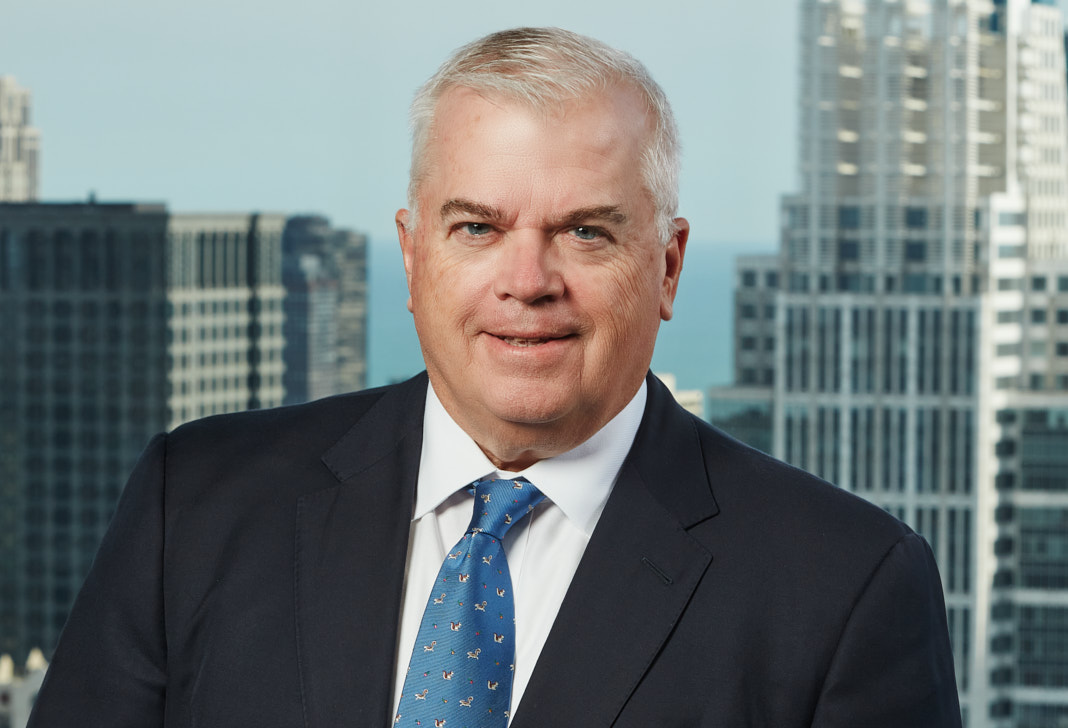
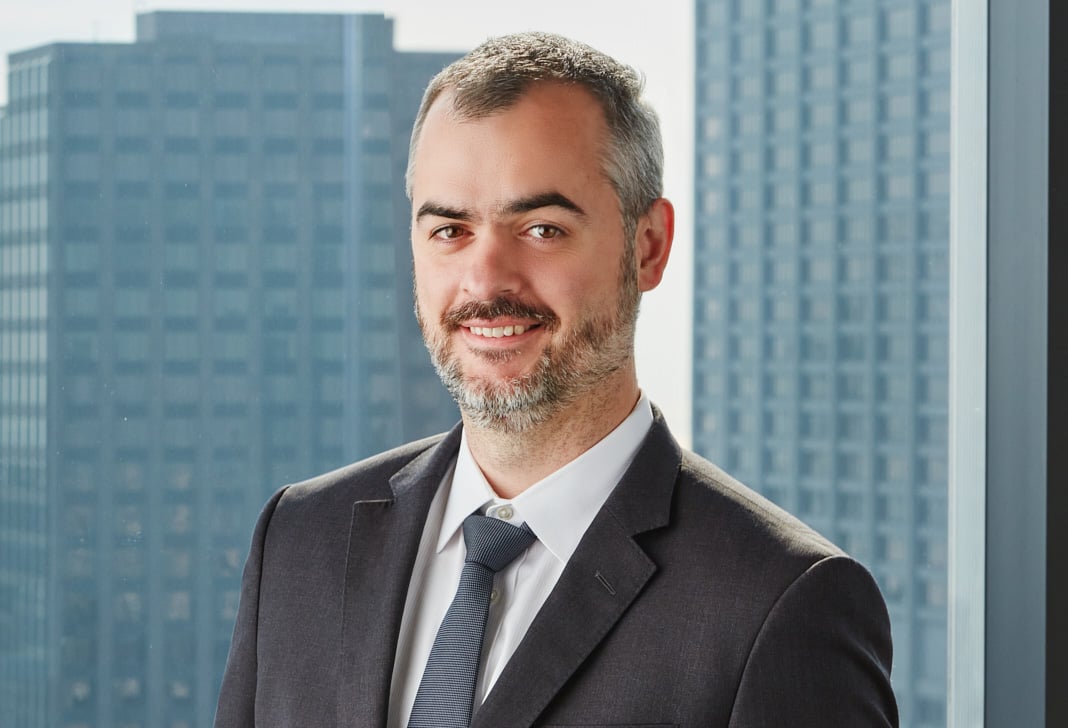
Partner Brian Sedlak welcomes Christopher Good, a managing director at RBC Capital Markets, and Mike Mitchell, a research administrator at The Ohio State University. They discuss the evolving higher education landscape, pressures on the traditional revenue streams, and P3s (Public Private Partnerships) in university settings.
Podcast: Play in new window | Download
SUBSCRIBE TO JONES DAY TALKS
Subscribe on Apple Podcasts
Subscribe on Android
Subscribe on Stitcher
Click here for the full transcript.
Dave Dalton:
Regular listeners to JONES DAY TALKS® Real Assets Roundup series know that, as you would expect, the topics and subject matters continue to broaden and expand. Today's program confirms that trend as the conversation turns to Higher Education and its real assets, funding, and infrastructure issues.
Partner, Brian Sedlak welcomes Christopher Good, Managing Director and Head of Higher Education nonprofit finance at RBC Capital Markets, and also, Mike Mitchell, who works in research administration at the Ohio State University.
We'll talk about the current stressors on the Higher Education model in the US as we come to know it, and how P3s, or Public-Private Partnership agreements, work in this space. Higher Ed, Real Assets, Jones Day, class is in session. Stay here. I'm Dave Dalton. You're listening to JONES DAY TALKS®.
Brian Sedlak:
Well, hello everybody. Welcome to the Real Assets Roundup, where we talk about all things related to real estate, energy, and infrastructure. I'm the host, Brian Sedlak, a partner in Jones Day's Chicago office, and I co-lead the real estate energy transition and infrastructure practice.
Today, our focus is on Higher Education and its relationship to real assets. With me, our guests, Christopher Good and Mike Mitchell. Welcome, gentlemen. This is the first time we've had third-party guests on the show, so you're the first. Welcome.
I've probably worked with you guys for a combined period in excess of 30 years, but since I know you, why don't you introduce yourself? Chris, why don't we start with you?
Christopher Good:
Sure. Brian, thanks since we have the pleasure and the honor of being the non-Jones Day speaker. So, tall order to live up to. Chris Good, Managing Director and Head of the Higher Education and nonprofit finance group at RBC Capital Markets, so the investment banking arm of the Royal Bank of Canada.
We work across a range and array of different types of transactions, with a range and array of different types of institutions, but predominantly, in the debt capital markets, in the infrastructure space, and then, M&A.
Brian Sedlak:
And Mike?
Mike Mitchell:
Mike Mitchell, and happy to be here. It's good to see Chris, and Brian, always a pleasure to see you. And thanks for asking me to participate. You will see joining me, my cat, Bob, wandering around behind me.
But I am currently working in research administration at the Ohio State University. Previously, I'm a recovering lawyer, and served as a lawyer at Ohio State a little over 10 years ago.
And then, the last 10 years, I've been in the Middle East as General Counsel and advisor to the board of the Qatar Foundation, working, over that period of time, on numerous P3s and alternative financing arrangements in the Higher Ed space.
And right now, spending a lot of time focusing on addressing some of the funding challenges in Higher Ed research, particularly at Academic Medical Center at Ohio State.
Brian Sedlak:
So, Mike, when I first met you, maybe in 2010 or around there, you were in Columbus. Then, we worked together while you were in Doha. Now, you're back in Columbus. It's wintertime, four Fahrenheit, maybe, at least, in Chicago on Thursday. Is Midwest still treating you well?
Mike Mitchell:
I enjoy looking at the snow. I am always cold. 10 years in the desert will do that to you. Also, I guess, getting old does that. But I love the seasons, but I got used to the warmth. Let's just leave it at that.
Brian Sedlak:
Well, you mentioned funding and how you've been working, a little bit, on the funding aspect and how you did that as well with the Qatar Foundation. And Higher Ed today is real asset rich. Obviously, it has a lot of tangible large scale assets.
It's somewhat liquidity-constrained, some would say. Endowments aren't magic pixie dust that could be sprinkled anywhere you want. They're somewhat constrained. And perhaps some would say the Higher Ed model is a little bit structurally stressed these days. Chris, why don't we start with you? What's your view on the current state of Higher Ed, particularly as it relates to real assets?
Christopher Good:
Yeah, it's tough to say that anybody in Higher Education, irrespective of what size institution you are running or operating, is having a particularly easy go of it at the moment.
Whether you're reading headlines in the journal or on Bloomberg, conversations around stress and distress in the Higher Education sector have been pervasive throughout the course of '25. Really started to accelerate in '23, '24, coming out of the pandemic.
And it's been interesting to see how the business model has come under pressure and how institutions have been working to creatively respond to confront what's now a whole new range of risks. Maybe I'd just differentiate.
So, it's always challenging to talk about Higher Education in the United States because the sector is so broad. There's approximately 3,000 Higher Education institutions in the US. They break down, roughly, a third, a third, a third across nonprofit private universities, public universities, and then, for-profit institutions.
For the purpose of this conversation, I'm going to focus my comments on, call it the top 200 private and public universities in the United States. So, think of large enterprises. You would see them on a Saturday if you were watching football, you would maybe going to their academic medical center for some form of medical treatment.
That business model has been resilient, but not without challenges and pressure. And it comes from a few different areas. One, just structurally, continued ongoing pressure with respect to net tuition revenue, not the sticker price but the discounted price that students are offered from institutions.
That net tuition revenue number has seen continued pressure on a year-over-year basis. And institutions have really had to confront what their enrollment profile looks like, especially institutions in the Midwest and the Northeastern part of the United States where there's population decline, to be able to attract the same number of net revenue tuition-paying customers.
And across the board, net tuition revenue is one of the biggest revenue drivers for the business enterprise. That's run into challenges and headwinds, and is expected to continue to do so.
At the same time, if you think about an institution like, and Mike, you could speak to Ohio State University, but roughly, 60, 65% of the top-line revenue at Ohio State comes not from the academic enterprise, but from the medical center enterprise.
So, the challenges that academic medical centers are facing, specifically in light of OB-3 challenges with Medicare, Medicaid reimbursement rates, figuring out what an appropriate payer mix is, that revenue stream has also come under pressure.
And as you start to work your way through the other businesses that academic institutions are in, take athletics, in the light of the house settlement, the advent of NIL, pressure on that margin stream is also being further compressed by virtue of the fact that there's a large subsidy that now needs to be paid to university employees who are college athletes.
You start to run down the list, and by the time you make it to federal research funding, which has been cut by the Trump administration, and pressure with respect to international enrollment, given the political climate that we're facing, and then, real pressure in terms of students gaining access to the United States, it is a tough business to make margin in across the board.
And to the point, Brian, about liquidity, with any type of business volatility comes a concern and a focus around liquidity and sources of liquidity. That's been at the top of management teams' minds for most of 2025, certainly in the first couple of quarters of 2025.
Brian Sedlak:
And Mike, you don't have to respond directly with respect to any particular institution, but would you agree with that, with Chris's views on the state of Higher Ed? Is there anything else we should be focused on here?
Mike Mitchell:
Yeah. And that was a real comprehensive summary of that, which I appreciate, Chris. Just one other thing that is relevant and really goes to the long-term sustainability of the business model is the overall view, the favorability rating of a Higher Education degree and the value of that degree or perceived value of that is really a concern at this point.
You look at some of the studies and some of the surveys done on just the favorability rankings of Higher Education itself and the value of the degree, that that has to be addressed in order to have the long-term sustainability. So, that's the only thing I would add.
Brian Sedlak:
How do you think Higher Ed institutions are addressing some of these issues, keeping in mind there's a vast difference between flagship universities, land-grant universities, and, maybe, what I'll call a 1,500-student liberal arts college in a very lovely rural place, bucolic. What do you think, how has Higher Ed been approaching these structural challenges?
Mike Mitchell:
Yeah, I think you're right, the rich get richer and the poor get the picture, as they say. So, Tier 1 research university, multiple revenue streams, asset-rich, has a lot more levers it can pull in order to address what's going on.
It has the ability to influence the policymaking environment through its activities. I'm not going to say lobbying, but through its activities. It has the ability to tweak the business model in a way that the bucolic liberal arts college located next to a farmer's field does not.
And therefore, the long-term prospects and sustainability of the Tier 1 flagship is more assured. Enrollment, all of the other numbers would bear that out. Chris, I'm interested in hearing your perspective on that, what you're seeing.
Christopher Good:
No, I think you're spot-on, the focal point where the rubber meets the mode is that the conversation around mission versus margin from an institutional perspective, and what's been challenging for even very sophisticated and competent management teams has been the nature of the headwinds that the sector is facing as a whole, figuring out what components of the enterprise and what components of the mission you're able to advance in what is, overall, a time of scarcity for Higher Education.
That's scarcity with respect to federal research funding, it's scarcity with respect to consumer appetite for the product, scarcity based off of market volatility and the endowment portfolio and investment income and investment earnings.
So, there's a great, I'll be a Higher Ed nerd for a moment here, a great Higher Ed theory called Bowen's Revenue Theory of Cost, which is, to paraphrase it, if you asked a Higher Education president, president of university or college, "How much money does it take to run this place," the answer would basically be, "Well, however much I can get."
And it's true, right? The point of that is, well, there's always something new that you could be doing in the pursuit of knowledge. You could always fund another research project, a faculty member could always take another sabbatical, there's another student you could enroll, and that the tension that the sector is facing, to some degree, there is just less margin to go around.
And that implicitly is forcing conversations and discussions around the mission and the relative portfolio of businesses or activities that a university is in.
It's an environment of challenging choices, especially building out a long-term cogent view of what the space is supposed to look like in 10 or 15 years, which, my own view would be, not too different from what we're looking at today in terms of, Ohio State isn't going to go anywhere.
But then, I'm sure the portfolio of activities and the way that the institution is functioning, that may look different in the future, especially in some of these areas that intersect with real assets like dorms.
If you're seeing more transitory student populations come to school, look to downsize on the cost. Do you necessarily want to live in a dorm, or something like the college athletic model, which is coming under pressure from some smaller schools.
That's where the conversation around efficiencies with real assets starts to get really interesting is, how do you leverage some of the private sector expertise really rapidly-changing market environment to run those types of assets more effectively in a margin-constrained operation?
Brian Sedlak:
Although, I guess that, at least all of the research I've seen seems to reflect that the longer a student is in an on-campus residence, the better they tend to do. And I was young once, believe it or not, and I know there was always a desire to be further...
Like when I was in the Army, the desire was to be off base, when I was in college, the desire was to be off campus. But there does seem to be a continued investment in student housing space on campus, and either directed by the universities, or maybe to your point, Chris, in terms of the private sector partnering with well-known private parties to develop those student residences to basically provide the amenity, but to not have to outlay the capital.
Christopher Good:
It's been a real provocative area of growth for schools, and I'll frame this in two or three different contexts. So, one is thinking about just the relative efficiency of being able to construct housing using your own internal capabilities versus the external capabilities of a partner.
And by the way, the relative efficiencies with respect to speed and timing-to-market of having someone who is functioning, maybe for a public institution, not as a publicly-regulated entity, not as a state, effectively a branch of state government with respect to hiring, contracting, speed-of-execution, time-to-market, there can be some real efficiencies in terms of picking up a partnership with someone who can just go faster to build what's necessary.
But I also think it's true, we're seeing more universities, effectively, ones that are in the Sunbelt region, think aggressively about acquisition of existing housing stock that is campus edge and really has nothing to do with anything that the school built previously.
So, if you're focused on revenue recapture and there is a dorm that a developer has built that is campus-adjacent, and you are trying to come up with a way to own the margin of the students by putting them in housing that you own, you're thinking about whether or not it makes sense to acquire that existing housing stock versus go through the real estate acquisition process, the construction process on a standalone basis.
Again, the pursuit of margin, you're seeing a lot of institutions look aggressively at, does it make sense to build more, does it make sense to own more, and what's the most economically efficient way to go about leveraging that type of partnership and that type of collaboration?
Brian Sedlak:
That's a good point. And staying on the real assets note here, Mike, it would seem like the provision of education would be something that would be ripe to put up on the internet, so to speak, to have people learn remotely, but the view is, probably, from this non-educator standpoint, that the college experience is more about learning, so to speak, or at least learning online.
It's more about the physical presence and learning from those about you. But at the same time, there has been a trend of going to the students in terms of opening satellite campus facilities so it's easier for the students to attend, and maybe using AI and technology to give them a more bespoke campus experience through that. Do you think that's right, or you think that's not really what's going on?
Mike Mitchell:
No, I think it's right. I think if you continue to view it as, it has been the model, d is your first-year class is 17 or 18-year-olds, and there's four years of education, the idea that you're immersing someone into an environment, so onsite is better than remote, a lot of evidence...
A lot of studies done about what the pandemic and what the current social media and technology is doing to young adults in isolating them, it's even more important now to put people in an environment where they have to interact with people, where they have to discover different ideas and viewpoints, et cetera.
But if you look at it from education as something which is a little broader and not as hide-bound as it used to be, you're looking at non-traditional students, you're looking at older students, you're looking at people reentering education, maybe coming to get certifications as opposed to four-year degrees.
As that all evolves, you're having a mix of people who may not want to live in a dorm room environment. And so, the commitment of long-term capital to building, what is a traditional shared space, whether it's a more modern type of quad or other things, may not be as relevant as it used to be, that the mix is important, and you can address that through the acquisition of these non-traditional assets that are adjacent to campus, or otherwise, around, that provide that to these different types of students.
And that makes a lot of sense, that these long-term commitments, the borrowing and the building and the counting on that long-term revenue stream from housing and dining, I just don't think that model is ripe for change.
The expectation that people will be there for four years is changing, to a certain extent, that if you listen to some of the commentators talking about how Higher Ed has to change, people like Scott Galloway, who I find has a fascinating view on this, that what institutions of Higher Ed should be doing is opening their doors to more and more and more people as opposed to this velvet rope that creates this highly valued credential and talking about tax-exempt status, being at risk if they're not opening it to more people.
Preeminent institutions of Higher Education are bragging about the fact that their admittance rates are the lowest they've ever been and the ratios are low when in fact they should be offering that to more and more people as a public good.
So, the broader you open it up and the more you open it up, you're going to have to have different models because limited enrollment means limited number of accommodations required, limited amount of food to be sold and fed.
So, there's a lot of change coming, that how these assets are financed or even contemplated and planned are going to have to change as well. And again, I've been wrong about other things, and I could be wrong about this, but I just think the ability to be flexible has to be built in.
Brian Sedlak:
Yeah, and it's interesting, I'm a beneficiary of the GI Bill, and I went to a commuter college, and I was very thankful for that. It really provided a transformative experience for me.
But the hypocrisy of it all, or maybe it's the American dream or maybe it's both, for my kids, I wanted the most prestige and elite university experience for them. And maybe it's a little bit of just living through your kids, I'm not quite sure.
But I just turned 59, and so, at most, I have six years left practicing law. So, I've thought about maybe going back and getting a psychology degree when I'm done, and being the tough-love psychologist.
So, if there's any university admissions officer or president out there who wants to develop some type of program for a lawyer on the back end of his career, still very vibrant, I'll give you-
Mike Mitchell:
You're just curious. You've always been curious as well.
Brian Sedlak:
Yeah. They should reach out to me.
Christopher Good:
I think, Brian, you should have mentioned that point as well. But it's interesting, Mike, one thing that resonated from you with what you were saying, the focus on cost and affordability as a barrier to access is a real challenge.
And that's part of what everyone would point to in terms of the reticence and the questioning about the overall value of Higher Education. It's like, we were talking to this CFO last week, and the comment was made, "Sending three kids to college two decades ago, that was like buying three cars. Now, it's like buying three houses."
And there's a limit to what the market is going to bear with respect to tuition revenue, there's a limit with respect to what the consumer is going to take on in terms of student debt.
And by the way, that's not even taking into account what OB-3 did with respect to the elimination of parent PLUS and Grad PLUS loans, which is going to make it more difficult for student attendance. It's going to increase the cost net-net of being able to attend.
Some of the programs that are most margin-producing for institutions at the graduate program. And so, the part that I see people struggling with is a little bit of, "Okay, well, I need to come up with a way to deliver the same quality product at a lower price point."
There's been a buildup in terms of the assets and the infrastructure that I own, sailing into revenue headwinds with deferred maintenance and upkeep on all of these facilities that I am running at a point in time where the consumer always going to need to be physically present for education to be done well.
But maybe you don't need to be physically present all the time for every aspect of the degree. And as more pathways open up that require less physical time on campus, what does that mean for the size of the campus?
What does that mean for the size of the infrastructure, and how do you think about managing that pool of assets? That is a macro question that people are starting to struggle with and try to build an outlook around. It's an area that's ripe for innovation.
Brian Sedlak:
And speaking of innovation, the listeners will criticize us for not addressing P3, if we don't do that since we've been involved in some of the first P3 transactions in Higher Ed in the United States, as well as some of the first-of-a-kind transactions that have taken place.
When we first started doing this in, I don't know, 2008, 2009, something like that, the model was really more of a monetization model. And the interesting thing about all P3 to me is that the people that really need the money the least are the ones that are more capable of generating funds from the model.
If you don't have good credit, if you've got financial issues, P3 is probably not a good model for you. But it seems like there's been a shift from the P3 model of monetization to the DBFOM model, which is not obtaining a large pool of money upfront that can be spent on various projects and be putting in an endowment.
But the shift seems to be more of a DBFOM; Design, Build, Finance, Operate and Maintain, where deferred maintenance needs to take place or a new central utility plant needs to be built or a new hospital needs to be built.
And maybe you can talk a little bit about the considerations in structuring a successful university P3 transaction. Mike, why don't we start with you since you've been there since the beginning of that in the Higher Ed industry?
Mike Mitchell:
Yeah, it's interesting, and my view of it is shaped by my participation in these deals with you, Brian. So, you and I have a particular outlook. Obviously, you've done way more than I have. I've done it on behalf of the owner, and you've represented folks in various positions in this.
But if you look at the priority, from my perspective, the priority was not the pool of money. The priority was cap cost avoidance, dealing with deferred maintenance issues, having funds available to spend on other things that are priorities.
So, what did Gordon Gee say, "The parking space never cured cancer," right? That resonates still. And so, you have to go in with your eyes open about knowing what it is that you want to obtain out of the P3 deal, that it's nice if you can do the pool of capital, but only if you're going to use it to put into a long-term endowment to earn money out of it in arbitrage play.
That's the reason to have that, because if you use that money right away, everybody's going to forget about why you did it after that money is gone. And people generally do not view these transactions favorably in a university community. That's an overstatement, but there's still some suspicion of it.
But the circumstances now where you're not going to have these big pools doesn't lessen the imperative of doing these things. It's even more important now to address some of those things like deferred maintenance, cap cost avoidance, improving facilities, responding to the needs of the institution. So, that's just my view at this point.
Brian Sedlak:
Chris, any view on that?
Christopher Good:
I guess, maybe, the way that I would frame it financially is, 10 years ago, this was a balance sheet trade, now it's an income statement trade. And the way that I would frame that more specifically is, look, if you, in a low interest rate environment, if you were able to arbitrage the market to get a large pool of capital that you were then able to put alongside of your endowment and net-net make out in a way that was margin accretive by virtue of higher investment income from a P3 transaction, that construction structure made a tremendous amount of sense.
And maybe it still will. You can see a world where, in a declining rate environment and in a liquidity-constrained environment that institutions are sailing into now, maybe the concession balance sheet improvement structure comes back as something that people are more interested in interrogating.
The focus now, it's all about, how can we improve the income statement, how can we reduce operating expense, how can we bring in someone who's qualified to help take expense out of the equation, because we're looking under the couch cushions for margin improvement, any place that we can find it.
And Brian, I know we've talked a lot about the repackaged energy P3, energy-as-a-service-type construct, which really isn't about an upfront concession payment at all as much as it is guaranteed performance, with improvement with respect to the operation of a university's utility plant.
That's something that any institution should be looking at now, especially as they're trying to come up with a way to maintain healthy margins to subsidize other parts of the business. So, that's my sense of it.
Brian Sedlak:
Yeah, I agree with that, and you are seeing it becoming more popular in the Higher Ed and the healthcare space. That's the other place where it works. Also, in that context, it's also a risk-shifting exercise, to have a world-class builder come in, build a plant.
Since they're the ones that build it, they're responsible for operating and maintain it for, let's call it the next 30 years, you're somewhat assured, because it's a closed loop system, that they're going to build it to a proper standard.
They're neither going to gold-plate it, nor are they going to under-build it because they need to be responsible for the O&M during that 30-year period. So, I've seen that as a growing way to meet some of the demands that have been placed on universities with respect to energy.
There's still some universities who are trying to engage in the energy transition and lower their carbon footprint, and there are others that their energy system is just run out of time. It's time to build a new one.
And they have a lot of demands on their capital, as we've talked about, and this is one way where it's another financing mechanism that, in essence, they don't have to use their own capital to get that project done. So, I do think that that's going to be a much more popular way moving forward.
Brian Sedlak:
So, with that, I know we've probably gone a little longer than we intended. Mike, particularly being from the university side, any key takeaways that university leaders should be thinking about in terms of where we're at in Higher Ed or the P3 process? What would be the battle scars in terms of the lessons learned from Mike Mitchell?
Mike Mitchell:
Yeah, I think it's making sure that there's full alignment, that everybody that's involved has a complete understanding of what will and will not happen in such a transaction, regardless of whether it's energy, parking, dorm facilities, lab facilities is a big one, the one that we looked at in London a little bit, Brian, one of the things you and I looked at on one of our projects, the need for wet labs and other research spaces.
There's a lot of opportunities, but everybody needs to be fully aligned, and the expectations have to be clear so that feelings are not hurt. We have all seen circumstances where that didn't happen.
Another thing that's happening right now and what I view as a positive byproduct of this current administration's view regarding FNA and research funding, is causing such facilities and administration, or indirect costs associated with large-scale grants, whether it's NIH or NSF, is this requirement under the proposed Fair Act of making the universities document clearly what their facilities and administration overhead costs are associated with grants.
Because you started seeing, at the preeminent institutions, an FNA rate, which was 65, 70% of the overall grant. So, you get your grant dollars, and in addition, you would get 70% of that, in addition, as facilities and administration overhead for the grant.
Obviously, they've cut that significantly, or intend to cut that significantly, but they're also requiring universities to look into and document clearly what their administrative expense load is and what their true facilities costs are, and I don't think that most institutions, and Chris, I'd be interested in your perspective, have really done a huge deep dive and have firm control as a corporation what are their actual expenses.
And so, this is a good thing. And it can do nothing but help universities, in the long run, of truly understanding the cost of research, truly understand the cost of buildings and their overhead expenses from an administrative standpoint.
That will enure to all of our benefits as taxpayers and consumers, but also, people who work and support the Higher Education industry. I think it's important that those things happen. So, that's just my current perspective on that.
Christopher Good:
Mike, that's such an insightful comment, because it's like the Bloomberg phrase, "If you can't measure, you can't manage." And going back to that Bowen revenue theory of cost analysis, if you were talking about the way that institutions did budgeting, again, 20, 30 years ago, you're in an environment of abundance, the impetus was to just say, "Look, we're gonna raise tuition 5% next year.
Year-over-year expenses can go up. We're not necessarily concerned about the operating model, the viability of the operating model." And in an environment of scarcity, which is what it looks like we're in and what we're going to be in for the foreseeable future, you just have to get more focused around the measurement of the businesses that you're in.
If that measurement happens in an idealistic setting, you get more efficient about figuring out how to deliver the mission. It also opens up the question for the businesses where you're not particularly effective, can you find someone who's more effective to help you out with it?
And the more facile the sector becomes in terms of having that dialogue around, where do we have the competency, where are we really good, and where can we bring in some outside expertise, again, that's where I think there's a really interesting problem set for public sector and private sector to collaborate with each other. I'd say, Mike, with respect to your background, I'd give a big O-H.
Mike Mitchell:
You're not going to get it from me. I work there, I didn't go to school there, Chris.
Brian Sedlak:
Oh, come on...
Mike Mitchell:
No, I can't do it. No, I can't do it.
Brian Sedlak:
And I will not-
Mike Mitchell:
I'll probably get fired, but I can't do it.
Brian Sedlak:
I'll not try to upset any of the Michigan fans, but in that last game, I did think that the whole rudest thing with the Ohio script in the snow, I appreciated it.
Mike Mitchell:
It was entertaining. It was-
Brian Sedlak:
That was pretty good. I'll give you... Thank you, everyone, and please join us on our next Real Assets Roundup podcast. Have a great day.
Dave Dalton:
Thanks very much, Brian. For contact information for Brian Sedlak, please visit jonesday.com. And while you're there, visit our Insights page for additional podcasts, videos, publications, newsletters, and other timely content. And of course, you'll find the previous Real Assets Roundup programs on that page.
Subscribe to JONES DAY TALKS® wherever you find your podcast programming. JONES DAY TALKS® is produced by Tom Condalus. As always, we thank you for your time and for listening. I'm Dave Dalton. We will talk to you next time.
Speaker 5:
Thank you for listening to JONES DAY TALKS®. Comments heard on JONES DAY TALKS® should not be construed as legal advice regarding any specific facts or circumstances.
The opinions expressed on JONES DAY TALKS® are those of lawyers appearing on the program, and do not necessarily reflect those of the firm. For more information, please visit jonesday.com.