JONES DAY TALKS®: Digital Assets, Capital Markets, and Implications of the Clarity Act
Investors, fintech developers, and traditional financial markets participants have waited for U.S. legislators to establish a clear regulatory framework for the digital assets space, and the Clarity Act is designed to do precisely that.
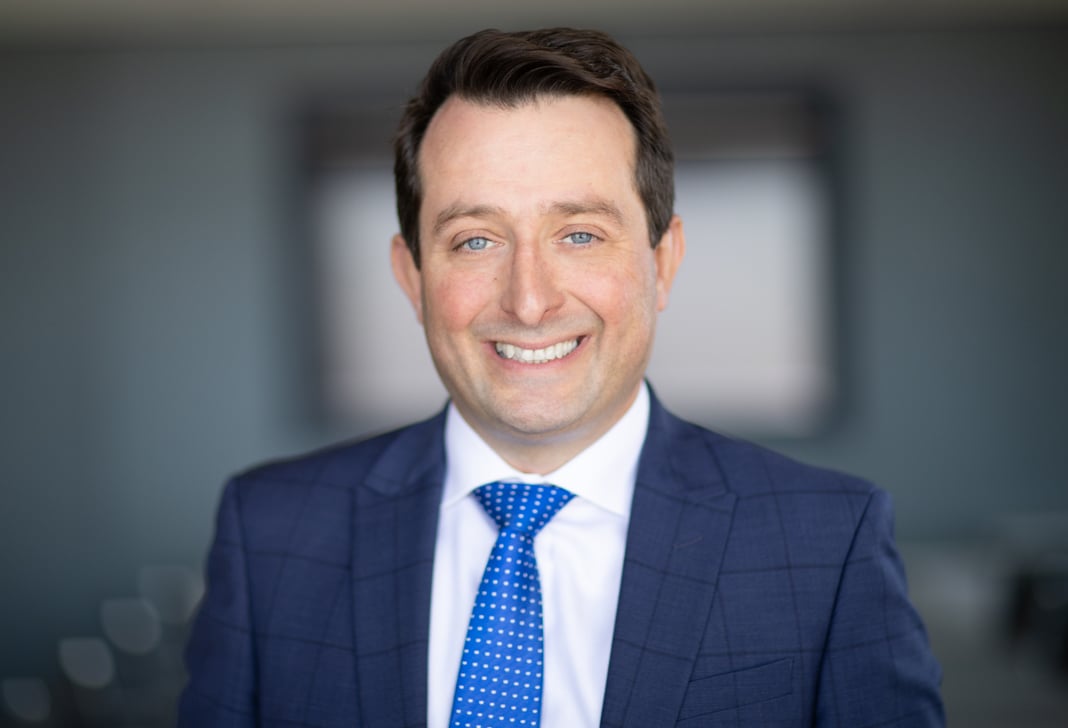
Jones Day partner Abradat Kamalpour and Fifth Era’s Matthew Le Merle explain how the proposed legislation would impact regulatory oversight and discuss its potential positive effects on innovations in decentralized finance.
Podcast: Play in new window | Download
SUBSCRIBE TO JONES DAY TALKS
Subscribe on Apple Podcasts
Subscribe on Android
Subscribe on Stitcher
Click here for the full transcript.
Dave Dalton:
As the digital asset space continues to reshape financial markets, US lawmakers have been working to establish a clear regulatory framework, and the Clarity Act represents the most consequential effort to do just that. The Digital Asset Market Clarity Act would establish clear rules for cryptocurrencies and digital assets. Jones Day Partner Abradat Kamalpour and Fifth Era's Matthew Le Merle will break down how the legislation would draw the line between securities and commodities in the digital asset space, what that means for regulatory oversight, and why it matters for the future of innovation in decentralized finance. Stay here. This should be good. I'm Dave Dalton. You're listening to JONES DAY TALKS®.
Jones Day Partner, Abradat Kamalpour has extensive experience in FinTech, blockchain and structured finance, and debt capital markets. He has been at the forefront of using blockchain-based technologies and cryptocurrencies on various transactions, including building out blockchain-based exchanges, tokenization platforms, and digital asset issuances, as well as the creation and legal build out of cryptocurrencies, crypto-based payment systems, and related offerings. He launched Jones Day's FinAccelerate business accelerated program, which is now in its fifth year.
And special guest Matthew Le Merle is Managing Partner and CEO of Fifth Era and Blockchain Coinvestors. His career includes experience as a global strategy advisor, professional services firm leader, corporate operating executive, private equity and venture capital investor, and board director. Matthew is a bestselling author of books focusing on blockchain technology and corporate innovation, and is a frequent keynote speaker at corporate events and industry conferences. Abradat, Matthew, thanks so much for being here today.
Abradat Kamalpour:
Thank you, Dave.
Matthew Le Merle:
And great to be here, Dave, and happy to be chatting to your audience.
Dave Dalton:
Well, thanks so much and we'll talk more in a second, Matthew. We're going to take a high level view of what's going on right now and then we'll talk more about Fifth Era, about FinAccelerate and about general goings-on in the industry. So let's go to Abradat first. Abradat, it never seems to slow down. Every time I talk to you, we live in this accelerated space in this industry. Talk about what's going on, and we'll get to the big picture in a minute and we'll talk about the Clarity Act, but just generally speaking in the digital finance space, what's going on at the moment? What's going on in the industry in terms of activity and what are people asking about?
Abradat Kamalpour:
Well, it's exciting times in the industry, Dave. Since the new US administration has decided to put some regulatory clarity into the market in terms of putting the Genius Act in place last year around stablecoins and they're making real progress on the Clarity Act, hopefully that becomes law soon, to regulate the space. We've had a lot of institutions enter into the market. We recently closed for Galaxy Digital, the Galaxy Digital State Street tokenization of money market fund, which was quite a significant transaction. We've got a lot more institutional mandates that are bubbling along that will hopefully become public soon. So there seems to be a lot of institutional adoption going on now in the market, which wasn't the case a couple years ago.
Dave Dalton:
Sure. What are clients asking you about right now? What are you hearing? What are they concerned about? What are they worried about?
Abradat Kamalpour:
It depends where the client's coming from. So if they're a bank, they want to understand what they need to do in terms of payment rails and where the opportunities and risks are. If they're asset managers, they're thinking about whether they can take advantage of this technology to better serve their investor base and clients. The technology really adds a lot of efficiency and optionality that didn't exist before.
Dave Dalton:
It seems like the phone must be ringing though with so much going on. And again, we'll talk more specifically about the Clarity Act, but I got to believe there's a lot of questions, concerns.
Abradat Kamalpour:
There really is, both in the United States and from outside of the United States, where institutions and others are looking at how to do that, what do they have to think about in terms of tapping the market here and working with US counterparties. So it's a busy time. Obviously you put crypto onto one side, which is kind of like I see as a sub, an important sector of the market, but not the whole story. The biggest story to me is the disruption that's going to have to the general financial infrastructure.
Dave Dalton:
We'll get to that in a second. That's a big one. Matthew, we've not talked before. Thanks for coming on with us today for JONES DAY TALKS®. It's a pleasure to meet you and talk.
Matthew Le Merle:
Happy to be here.
Dave Dalton:
We'll get back to some of the things Abradat talked about and maybe pick up on some of that. But tell us about Fifth Era Partners and your role there.
Matthew Le Merle:
So we're an investment firm. We invest in emerging disruptive technologies, particularly those that are helping build what we call an autonomous digital economy. This is at the convergence of AI, blockchain and the internet tech stack. And this is sort of like year 40 of what we think will be still a very long transition to a fully autonomous digital economy, but we're beginning to see in every way the power of the space and the leading companies in it. And that's what we do. We're an investor in about 80 unicorns, 2,000 or 3,000 companies in all. And we've been doing this for a couple of decades now and expect to do it for quite a lot more.
Dave Dalton:
In your background, finance, tech, legal, how'd you get to Fifth Era, ultimately?
Matthew Le Merle:
Everything but legal.
Dave Dalton:
Well, that's why we've got Abradat here, right?
Matthew Le Merle:
We as a group, our founders and partners have a combination of top tier consulting, corporate executive, investment banking sort of expertise, but for each of us, venture and innovation investing, for most of us, it's a 20-year profession and role. For myself, it's been my passion for a long, long time. Internet, FinTech, digital content, and then adding in blockchain and advanced computing over time.
Dave Dalton:
Your firm recently published a thesis focused on an emerging autonomous digital economy. What exactly is that and where does blockchain fit in?
Matthew Le Merle:
Yeah. So I think people are beginning to understand this a lot more than when we first began to think about this 15 years ago. The internet digitalized communications and content, we all take that for granted. Every industry and business couldn't survive without digital content and communications and the infrastructure that support that. As Abradat pointed out, we began digitalizing the financial infrastructure and upgrading it from sort of version one, which is what most banks, payment companies, payment systems use today. And we're beginning to see what sort of natively digital rails can do for finance, asset management, insurance and so on where value can move natively over the internet. Now, we're adding in the digitalization of intelligence and the digitalization of work with what we sort of loosely call AI and all of these three things are now converging. So the internet, which brought us the first, blockchain, which really enabled the second and the AI tech stack, which is providing the third are all converging.
And if you just think forward and sort of say, "Well, what does that mean for the global economy?" We believe that it means that we upgrade to an autonomous digital economy. Now that doesn't mean that machines do everything, but it certainly would be the flavor of what that future looks like. And just to make sure this doesn't sound too sci-fi, Cloudflare announced last month that more than 50% of internet traffic is now driven by AI and bots. So we've already crossed the point where human to machine is now in favor of the machine. And we think those numbers are just going to go up and up. We think that most business activity in most industries will be empowered by that combination of internet, blockchain and AI.
Dave Dalton:
To call what you just described disruptive would be putting it mildly. You've seen this coming, I'm guessing, for quite some time.
Matthew Le Merle:
Yeah. I know everyone listening to this sort of is aware of this. They know it's coming. Some boards and executive teams are preemptively taking action, trying to figure out how to use, for example, agents in their business processes, how to move to digital infrastructure in more and more of their activities. Some have announced very large sweeping reductions in workforce, knowing that a lot of the jobs are going to be increasingly handed off to more capable software. Humans are not necessarily designed to do many of the tasks that we expect them to do today and software can help us create better solutions to those tasks and activities. So I don't want to say this is all new. It is disruptive for sure, but it's an evolution, not a revolution. It's been ongoing for a long, long time. And for anyone listening to this podcast, just think back 20 years to what your business did and how it did it and look at what you're doing today.
And you can already see the tea leaves of the future in what's just occurred to date. We're going to see more and more work offloaded to advanced computing software and solutions. And increasingly, that competitive advantage is not going to come to people that try and brute force things with human labor. It's going to come to those people that leverage these new technologies and infrastructure to get competitive advantage relative to their competitors and their industries.
Dave Dalton:
Where can one read the thesis? Is this a publication, a white paper?
Matthew Le Merle:
It's a lot of bits and pieces, Dave. We've written books on this. We do monthly newsletters, podcasts. We're very transparent. We want to share our investment thesis. If you just go to fifthera.com, there's a whole section of the website, which is free where we share our latest thinking. But like I say, you can also go to Amazon, Apple, look up our names and you'll find some of the books we wrote 10 and 8 and 6 years ago. But as investors, and this is the most important point, Dave, for us investors, we are investing in startups and entrepreneurs and scaling companies that share this vision of the future. And the rest of the world is beginning to know their names. They're SpaceX and OpenAI and Anthropic and the Coinbase and Kraken and Anchorage and Securitize and Revolut and Monzo. These are the companies that are already embracing a very different view of how to be successful with technology enablement.
Dave Dalton:
Sure. And what sort of transactions or deals are attractive right now? What are people in your world looking for?
Matthew Le Merle:
Let me say that all innovation-based investing is high risk and the failure rate even for the world's best venture capitalists is very, very high. And so the way that you think about investing changes during the course of the emergence of a business from early stage to mid-stage to late stage to eventually, some of them being public companies. And so we participate in the early stage, mid-stage and late stage of the private markets and our investment approach actually changes. So to answer your question, in the early stage, you're looking to deploy capital in the sub-themes that are most important for the creation of this autonomous digital economy. And that tends to be infrastructure, but it could be internet, blockchain or AI infrastructure or the convergence of all three. By the mid-stage, what you're actually trying to do is identify the emerging category leaders in each task or activity or space.
And the way we think about that typically is if the world's best investors all agree that this company is the category leader in that particular theme, then they may be wrong, but they're less likely to be wrong and it's a great signal for deploying additional capital into the mid-stage. By the late stage, the opportunities are becoming more apparent and valuation is the biggest challenge. You're trying to deploy capital at a better risk return trade-off, but the valuations are going to be obviously substantially higher. If you just took an example of, for example, SpaceX, since it's on everyone's minds. Here on the West Coast, we all knew about SpaceX a long, long time ago. But most people, if presented the opportunity to invest seven and eight years ago would say no because they thought it was all about rockets to Mars. By the time people really got a little bit more clarity about Starlink and a global satellite infrastructure and the folding in of AIX, more people began to lean in. But of course the valuation was in the hundreds of billions.
Dave Dalton:
Oh, sure.
Matthew Le Merle:
And of course, other investors only joined the party pre-IPO a month ago and they were paying a trillion and a half. And now the company's public and obviously shares popped up and they've come down and you make your own decisions. By the way, nothing I've said is investment advice...
Dave Dalton:
Of course not.
Matthew Le Merle:
Can't provide investment advice in the webinar, but I'm just trying to share the way we think about it in the sub-asset categories that make up venture and private equity.
Dave Dalton:
We are living in a fascinating time, that's for certain. One more thing, then we'll go back to Abradat for a second. Forgive me for dumbing the conversation down a little bit, but there are certain hotbeds geographically of where tech deals originate. US, UK, Asia, where are you seeing a lot of the innovations coming out of right now?
Matthew Le Merle:
It's a great question, Dave, and you did actually ask what my background was before. I was a Senior Partner of big consulting firms way back in the '90s and '00s. And this question you're asking is one of the things I worried a lot about, especially when leading the global innovation and digitalization practices for the last firm I was within. There are clearly hubs of digital innovation globally. And if you think about where they are from an internet point of view, we know their names. San Francisco, New York to a lesser extent, Los Angeles, Toronto, Austin, maybe Boston a little bit. By the time you get to Europe, London, Berlin, a lesser extent, Israel for certain purposes. I know there are some other cities I could mention, but those are the big ones in Asia. It tended to be Tokyo, Seoul, Hong Kong, Singapore, and a little bit in India and Australasia.
Now for blockchain, it's a little bit more concentrated, but I've named most of the names already. By the way, I should have said Shanghai in that mix as well. For blockchain, it was a little bit more concentrated and there were some reasons for that regulatory being one of them, which I know Abradat is keen to talk about today. And that did certainly force some innovators offshore from the US so that we saw some new and novel hubs surface for a while like Zug in Switzerland or Lisbon in Portugal, which are great cities and great locations, but aren't natural digital innovation hubs. They created that for a while because of regulation rather than because of their concentration of innovation capacity.
And then for AI, it's actually very concentrated. The vast majority of leading AI companies are in California, in China, or in London. And that doesn't mean there aren't a few in other places. Of course, there are. I just read something this morning, Dave, just two firms, OpenAI and Anthropic just bought 7 million square feet of office space.
Dave Dalton:
Geez.
Matthew Le Merle:
How big they are, how much they're scaling, and if you ever though Silicon Valley was dead, you were wrong. I mean, San Francisco office real estate is booming again because of this enormous convergence and buildup of AI activity in the Bay Area.
Dave Dalton:
Certainly sends a message. Let's pivot and talk about the Clarity Act for a second because Abradat, this is something the industry has been waiting for in one form or another for quite a long time. Give us a high level summary of the act. And I know it's complicated, but if you can kind of give us the elevator speech in terms of what it's meant to do and where we are.
Abradat Kamalpour:
Sure. Well, hopefully it becomes law, but this is Congress's attempt to create a clear rule book for digital assets in the United States. Its main goal is to determine when digital assets are regulated as security by the SEC and when they're regulated as commodities by the CFTC, replacing just years of uncertainty and enforcement driven policymaking. Under the last administration, it was really regulation by enforcement. Under the new administration, there's been more clear guidelines provided by the regulators on what needs to be done when you're looking at issuing or creating digital asset related projects. And really, it classifies digital assets into different categories, digital commodities, investment contract type assets, and obviously certain payment stablecoins, which the Genius Act dealt with stablecoins last year. And it assigns regulators based on those categories.
So the SEC would obviously generally oversee investment contract style offerings, i.e. securities or instruments that have security like qualities. And the CFTC oversees digital commodity markets and trading. It creates a path for decentralization. So by that I mean allowing some projects to start as capital raising ventures and then transition towards commodity treatment if and when the actual underlying blockchain network becomes sufficiently decentralized. There's some real issues around that. And you've probably seen some case law around that where something started as really what was more investment contract-like product and then turned into something that is more of a decentralized digital asset product.
And it deals with things that were missing. It requires disclosures, registrations and customer protections for exchanges, brokers and other intermediaries and deals with the segregation of customer assets and conflict of interest rules. That's what the Clarity Act really is trying to do. It's less about legalizing crypto and digital assets and more about finally defining the lanes. The SEC lane, the CFTC lane and the rules moving between them. And this is desperately needed. And you can see that there's been such a movement towards the United States in the last year and a half of firms that were leaving. A lot of firms are coming back and establishing their businesses out here.
Dave Dalton:
And you and I have talked about this many times. You and I record videos. Well, we'll talk about FinAccelerate in a second, but we've talked about this. Markets hate uncertainty, right?
Abradat Kamalpour:
Yes.
Dave Dalton:
And you've got this brilliant emerging technology and these opportunities there and you have investors with capital, but you got to know what the rules are. The Clarity Act gets us close, doesn't it?
Abradat Kamalpour:
The Clarity Act is going to significantly help. There is some debate obviously that you've probably read about between banks and some of the established digital asset firms around how stablecoins will be treated, et cetera. But it's going to clarify what can be done, what can't be done, who's your regulator and how things are going to be treated. And we desperately need that. In some cases, it's really hard to determine whether a product is an investment contract. You can argue one way or the other. Hopefully this legislation will help firms that are launching projects, firms that want to invest in projects have some real confidence in what needs to be done.
Dave Dalton:
And Matthew, if you would pick up on what Abradat was saying, because this is important to investors, certainly. This has got to encourage investment where maybe people might've been a bit hesitant before.
Matthew Le Merle:
I'm agreeing with the point that regulatory uncertainty chills some folks, but the question is, who does it chill and what difference does that make? So we, as venture capitalists, always operate in a world of regulatory uncertainty because disruptive innovation is by its very definition going to disrupt established industries and businesses and sometimes laws and regulations will have to change. And here we are 40 years into the internet, we still don't have regulatory clarity globally about simple issues like the right to be forgotten or have privacy or copyright for that matter. Tax collection should work in different jurisdictions around the world, but it hasn't slowed us down. All the world's most valuable companies are internet companies. So why do I say that? Because when it comes to areas like blockchain and digital finance, the people that have been most chilled by the regulatory uncertainty in my mind are the current incumbents.
It's very hard for a board of directors of a large public bank or asset manager to make a multi-billion dollar acquisition if there's regulatory lack of clarity around what they're buying. And so even though we are seeing billion dollar plus acquisitions in the industry, it's tended to be incumbents. Coinbase and Kraken and Ripple and Robinhood making the acquisitions. It's not been Bank of America and JP Morgan making these multi-billion dollar acquisitions. So that's one issue. How do you as a board of directors or how do you as the executive team of a very large established company participate in an industry where you're not quite sure what you're buying? When it comes to launching products, it's somewhat similar. The disruptive companies launch their products and it's painful if there is a lack of regulatory clarity for sure. But Coinbase, Kraken are still very large businesses today, not withstanding that lack of clarity, same with Kalshi or Polymarket or whatever.
But established companies can't launch product if they're not sure what they're launching and how it's going to be regulated. And so in practice, with the exception of few Bitcoin or Ethereum derivative products and wrappers, most of the very large institutions haven't really done very much. And just to give you an example of that, I can move my money anywhere in the world in almost real time, almost no cost if I use a stablecoin and I begin and end with a digital wallet. But if I try and go through my banking partners between my local bank, the bank network that will facilitate the movement and the correspondent banks at the other end, it's going to be painfully slow, extremely costly, and very awkward to deal with.
And by the time I'm an American trying to move money to Latin America, to my family or to Africa, to my family or to the Far East, the Philippines or something to my family, I may lose 30% or 40% of the value of the money I'm trying to spend just because today's banking system is so decrepit and is running on version one technology that's not fit for purpose for this new world that we're describing. So I'm 100% with you that regulatory clarity helps. But the funny little piece of that reality is, the disruptive companies do tend to gain even more from regulatory unclarity.
Dave Dalton:
That's interesting. That's interesting.
Matthew Le Merle:
And we've had this really weird circumstance, certainly around digital finance where the incumbents have been trying to slow down the creation of digital clarity whilst in fact giving up more and more ground to the disruptive companies that are pulling further and further ahead. And they think that their strategy has bought them time, but in fact, it's given more time for the disruptive companies to organize and gather in hundreds of millions of customers and serve them with great products that work really well for a digital age.
Dave Dalton:
And that's the trick, right? The market will not tolerate that. You described a scenario a couple minutes ago where you get 30% of the assets or resources drained that you're trying to transfer. Consumers aren't idiots, at least not for long. So don't the legacy financial institutions have to get on board?
Matthew Le Merle:
Wait a second, Dave. I mean, in my prior profession in the 1990s, we laid out all the things that were wrong with global payments for the world's largest banks who were our clients. And here we are 30 years later and they haven't upgraded their global payment infrastructure. And you sort of say, "Why? Why is that true today that the banks can't move money in real time at no cost globally?" Well, they make too much money from moving money in slow non-consumer friendly ways and consumers haven't had a choice. So even though it's very anti-client, anti-consumer to say, "Okay, I'll move your money in three days time and I'm going to charge you high fees and big spreads and foreign exchange spreads on that transaction." Even though that's very non-consumer oriented, regulation has enabled the perpetuation of a status quo that is slow, costly, and by no measure consumer oriented.
And I'm very excited by everything I just said because that time is now changing. And as Abradat will tell us more about, I'm sure there is the regulation coming together, but the banks, for example, want the Clarity Act to not allow certain things to occur, which if you were simply pro-consumer, you would say that doesn't make sense. Consumers should be the beneficiaries of regulation that is fit for a purpose for a fully digital economy. And the current manifestations of the acts that are passing here in the States are not as pro-consumer as they could be.
Dave Dalton:
I was going to ask you if there were some boxes that hadn't been checked. I just answered that. But let's go to Abradat for a second. If the Act doesn't pass before the midterms, people are feeling optimistic like it's going to. If it doesn't, do we go back to square one with the new Congress in January or is there enough momentum there? You think this still goes?
Abradat Kamalpour:
It won't be back to the position in the previous administration because the regulators that have been appointed are pro-innovation and have provided more guidance and guidelines to enable business to happen. You're going to have more institutions that have done deals and as a number that we have acted on and more that are in the pipeline. So it does create a bit of doubt about where the direction of regulation is going to go in the US. I have to say it was bipartisan. There is a bipartisan approach to this. It will require bipartisan approach for it to pass. So it's not like one party or the other. If it passes, we're going to have a turbocharged industry happening. If it doesn't, it will sort of go at the pace it's going which is pretty fast anyway, but it will really turbocharge things for a lot of institutions that they need to, at that point, realize that they need to adapt or they face serious risks, which they do in my view anyway, if they don't adapt because it will happen eventually. It's just about timing.
Dave Dalton:
For sure. For sure. And speaking of timing, boy, that was a tortured segue, wasn't it? But speaking of timing, you've got a couple of marquee events coming up here in the second half of 2026, Abradat. FinAccelerate?
Abradat Kamalpour:
Yes. We are gearing up to open for applications for this year's program in Silicon Valley. Last year we had over 250 applicants, which is a record for the program. And we let in around 20 to 25 companies every year. So with more VC partners that are involved in the program and more institutions that want to recommend companies to apply and given the regulatory position to be a very, very significant year this year for the program.
Dave Dalton:
It gets better every year and I've been fortunate...
Abradat Kamalpour:
Well, you've been coming every year, Dave.
Dave Dalton:
You keep inviting me and I can't figure out why. But no, it's fascinating. I learned something and I'm a layperson where it comes to all this stuff. And the people you bring in, the presentations are more and more impressive every year. The institutions, they're showing up now. Very, very impressive. I don't think there's something else like this literally in the industry right now.
Abradat Kamalpour:
No, there really isn't that's being driven by a law firm. And our program is a mix of giving the companies and cohort legal support, which we do and having people like Matthew involved in the program and be on some of The investor panels and provide guidance to some of these companies has been fantastic. He was there at our first program and we hope to have him with us this year, but it's growing bigger and bigger. Last year, Andreessen Horowitz hosted a whole session and this year they want to do it again. So things are really gearing up.
Dave Dalton:
Well, congratulations to you and the firm. It's quite a program. This is year five, right Abradat?
Abradat Kamalpour:
Yes. Year five. Yes.
Dave Dalton:
Year five. So congrats. You've both been very generous with your time. Let's just wrap up with this. We talked about the state of the market. We talked about the Clarity Act. We talked about FinAccelerate. Anything you want to sign off with? We've got a pretty interested audience here. Is there anything we didn't cover, Matthew, that you want to mention on our way out?
Matthew Le Merle:
I hope that the sentiment has come across. If you're a board director, you're a senior executive in the large company or if you are the general counsel, for example, gone is the moment when you can pretend that we're not going to have a global autonomous digital economy. We clearly are. And whilst the devil's in the detail of whether that's fully globally harmonized or it's somewhat more localized, does it cover all industries or if some industry is held out for one reason or another, this is the lead motif of our times. And for the next 20 years, your success as business leaders going to be very much predicated on the degree to which you lead your organizations into that future. And whilst we do understand and appreciate that playing lobbying and regulatory slow down sort of games is a strategy for incumbents to buy more time, this train has left the station.
So all I want to encourage everyone listening is to change their mindset, think proactively and positively about how you use this infrastructure, the convergence of internet, blockchain and AI to accelerate your businesses. Because if you don't, someone else will. And it's not so much it's the classic, if you don't run away from the lion, you will be at the back of the pack and everyone else only needs you to be slow for them to benefit. This is one of those moments where every board, every executive team, and obviously, every legal team needs to be constructive about how do we embrace these technologies for progressing our business and get out of this very negative mindset of we're anti-innovation, we're anti-change and somehow like king commutes, we're going to tell the tide not to come in. I mean, we know how that story ended and it's going to end for businesses in a very similar way.
Dave Dalton:
Hopefully they're listening. Abradat, take us out. Anything you'd add?
Abradat Kamalpour:
I totally agree with what Matthew said. Look, when I started my legal career, we still used fax machines. And who uses fax machines anymore? And to Matthew's point, you either move or your business is going to face serious consequences because the efficiencies to be gained, the changes that are going to happen as a result of these technologies, you can only slow it down for so long. It always wins. The innovation always catches up and it wins.
Dave Dalton:
Absolutely. Well said. Hey, a very productive half hour. Thank you both for being here and it's been great. Matthew, I hope we talk again. I guess I'll see you in San Francisco. Abradat, I'll be in touch. We'll talk early next week. Okay?
Abradat Kamalpour:
Thanks very much guys. Thank you. Thank you David and Tom. Thank you Matthew. Thanks guys. Bye.
Dave Dalton:
You're both awesome. As always, Abradat, thanks. Matthew, thanks. Pleasure. Pleasure meeting you.
For contact information and a full biography for Abradat Kamalpour, please visit jonesday.com. While you're there, go to our insights page where you'll find more podcasts, videos, publications, newsletters, blogs, and other pertinent information. Subscribe to JONES DAY TALKS® at Spotify or wherever else you find your podcast programming. JONES DAY TALKS® is produced by Tom Kondilas. As always, we thank you for listening. I'm Dave Dalton. We'll talk to you next time.
Speaker 4:
Thank you for listening to JONES DAY TALKS®. Comments heard on JONES DAY TALKS® should not be construed as legal advice regarding any specific facts or circumstances. The opinions expressed on JONES DAY TALKS® are those of lawyers appearing on the program and do not necessarily reflect those of the firm. For more information, please visit jonesday.com.